Banh beo recipe creates delicate Vietnamese steamed shrimp cakes that are a beloved street food and appetizer throughout Vietnam. These small, elegant cakes feature a tapioca flour base topped with seasoned shrimp, crispy fried shallots, and a drizzle of savory fish sauce. A banh beo recipe delivers tender, slightly chewy texture with bursts of umami flavor from the shrimp and rich fish sauce topping. The combination of soft tapioca cakes with crispy garnishes and fresh herbs creates an irresistible contrast that makes these cakes perfect for entertaining or casual family meals. Whether you are making banh beo for the first time or perfecting your technique, this recipe guides you through every step to achieve restaurant-quality results at home.
| Prep Time | Cook Time | Total Time | Servings | Difficulty | Cuisine |
|---|---|---|---|---|---|
| 20 minutes | 25 minutes | 45 minutes | 6 servings (12 cakes) | Intermediate | Vietnamese |
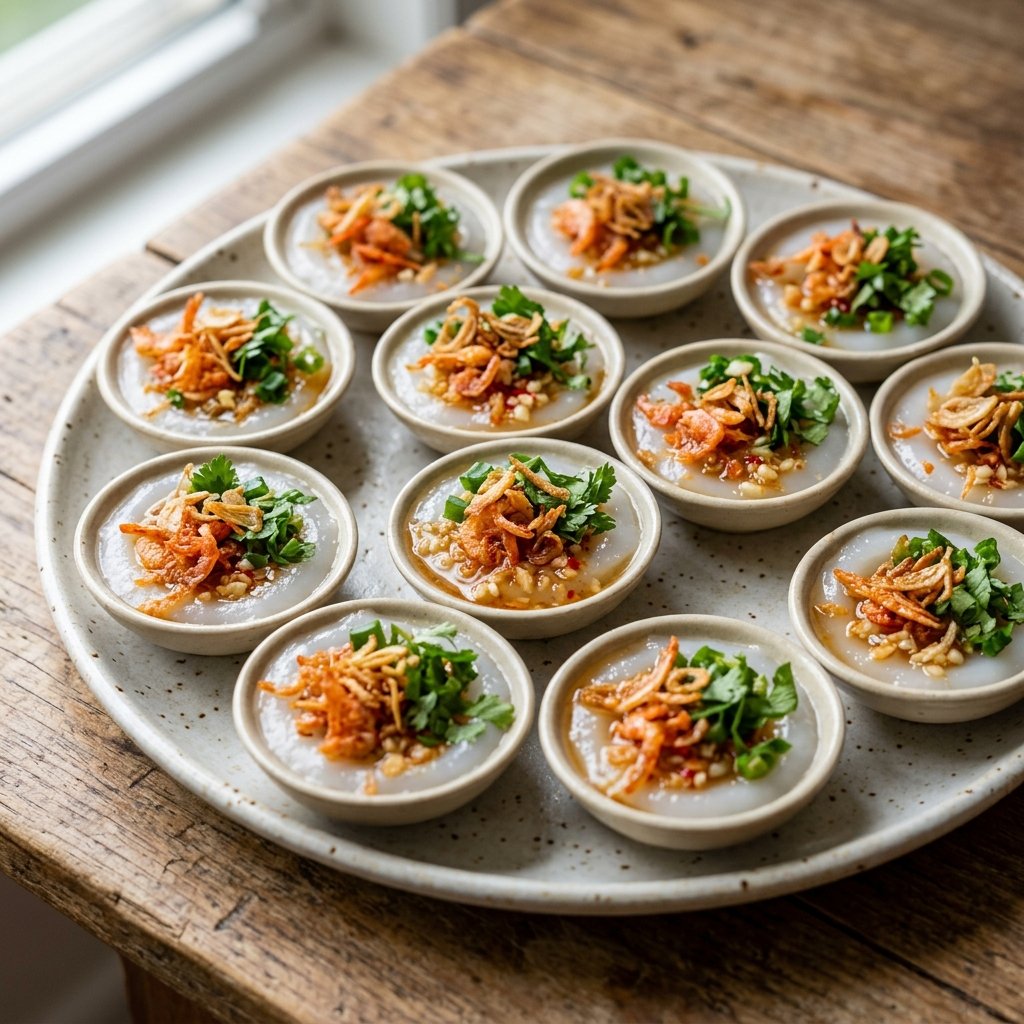
Table of Contents
Table of Contents
Why This Banh Beo Recipe Works
This banh beo recipe succeeds because it balances simplicity with authentic Vietnamese flavors that make every bite memorable. The foundation uses tapioca flour, which creates that signature tender, slightly chewy texture that defines quality banh beo. When prepared correctly, tapioca flour absorbs the steaming moisture perfectly without becoming mushy or too dense. The result is a cake that holds its shape while maintaining a delicate mouthfeel that melts on your tongue.
The shrimp topping is where this banh beo recipe truly shines, as cooked shrimp delivers natural sweetness and umami depth. Fresh shrimp contributes a clean, briny flavor that complements the mild tapioca base without overwhelming it. Many home cooks appreciate this banh beo recipe because the shrimp cooking happens quickly, reducing overall preparation time. The protein also provides satisfying substance to what might otherwise feel like a light appetizer.
Fried shallots are essential to this banh beo recipe, adding crucial textural contrast and deep, caramelized onion flavor. These crispy garnishes provide an audible crunch that enhances the eating experience and prevents the dish from feeling one-dimensional. The fish sauce drizzle ties all elements together with its characteristic savory, salty punch that Vietnamese cooks understand intuitively. Together, these components make banh beo recipe cooking feel exciting rather than complicated.
Home cooks love this banh beo recipe because it requires minimal equipment and ingredients while delivering impressive restaurant-quality results. You need only a steamer, mixing bowl, and small shallow dishes to create authentic Vietnamese cakes. The recipe also scales easily for feeding a crowd without requiring double the cooking time. This efficiency makes banh beo recipe perfect for weeknight entertaining or meal prep for the coming week.
Banh Beo Ingredients
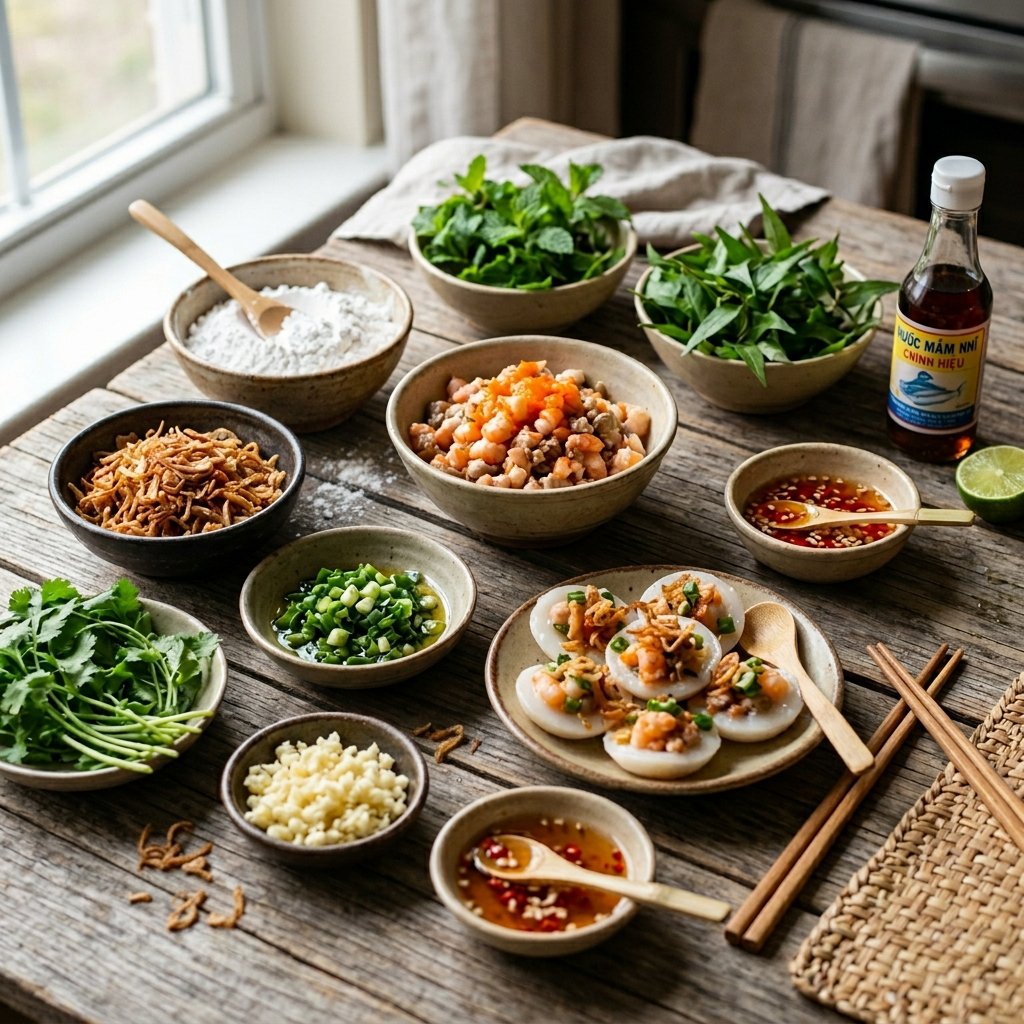
Gathering quality ingredients ensures your banh beo recipe produces authentic flavors and proper texture. Each component plays a specific role in creating the balanced taste and appealing presentation that makes banh beo such a prized Vietnamese dish.
| Ingredient | Quantity | Notes with Alternatives |
|---|---|---|
| Tapioca flour | 1 cup | Use pearled tapioca flour for best texture. All-purpose flour creates denser cakes and is not recommended for authentic banh beo recipe results. |
| Water | 1.5 cups | Room temperature water works best. Use filtered water if your tap water is heavily chlorinated, as this affects tapioca texture. |
| Salt | 0.5 teaspoon | Fine sea salt enhances the tapioca base. Kosher salt requires additional volume due to larger granules. |
| Shrimp, medium | 0.5 pounds | Fresh or thawed frozen shrimp work equally well for this banh beo recipe. Peel, devein, and cut into bite-sized pieces for even cooking. |
| Shallots, fried | 0.33 cup | Purchase pre-made crispy fried shallots or make from thin-sliced fresh shallots fried until golden. Store-bought shallots save significant time. |
| Fish sauce | 0.25 cup | Essential for authentic banh beo recipe flavor. Use good-quality Vietnamese fish sauce. No adequate substitute maintains the characteristic umami punch. |
| Cilantro, fresh | 0.25 cup chopped | Fresh cilantro brightens the banh beo recipe. If you dislike cilantro, omit entirely or replace with fresh mint for banh beo variation. |
| Scallions, green | 2 stalks sliced | The white and light green portions offer mild onion flavor. Reserve dark green parts as garnish for visual appeal in your banh beo recipe. |
| Garlic, minced | 1 clove | Fresh garlic provides aromatic depth. Garlic powder cannot replicate fresh garlic quality in this banh beo recipe. |
| White pepper | 0.25 teaspoon | White pepper blends seamlessly without speckling the delicate banh beo cakes. Black pepper creates visible dark spots that some prefer to avoid. |
Understanding how these ingredients interact helps you customize banh beo recipe variations while maintaining authentic character. The tapioca flour forms the backbone, while shrimp and fish sauce provide the distinctive Vietnamese flavor profile.
How to Make Banh Beo
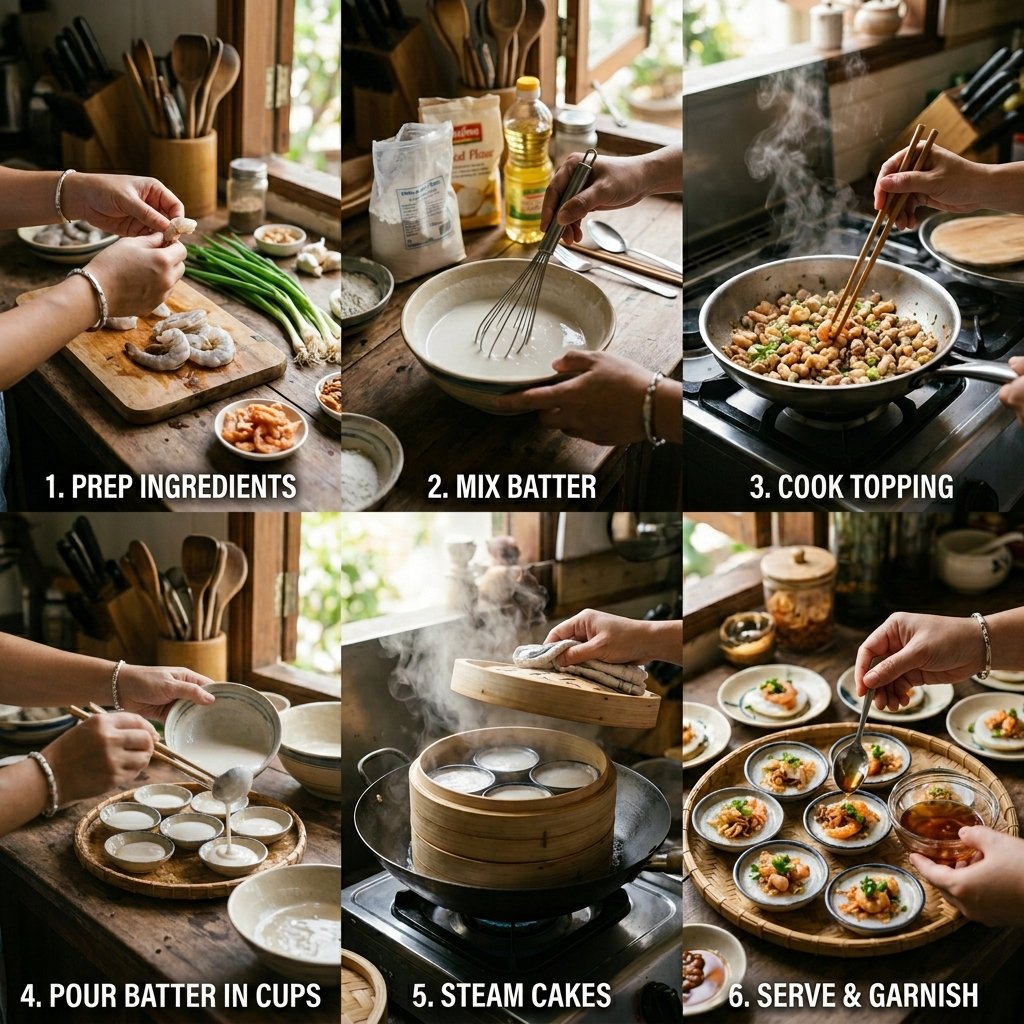
Making banh beo recipe follows a straightforward process that yields tender, flavorful steamed cakes when you follow each step carefully. This banh beo recipe requires attention to detail but minimal active cooking time, making it manageable for cooks of various skill levels.
Preparing the Tapioca Batter
- Combine one cup of tapioca flour with one-half teaspoon of salt in a large mixing bowl.
- Add one and one-half cups of room temperature water gradually while stirring constantly to avoid lumps in the banh beo recipe mixture.
- Mix until the batter reaches a smooth consistency similar to pancake batter, about two minutes of stirring.
- Allow the batter to rest for five minutes, which helps the tapioca flour fully hydrate for better banh beo recipe texture.
- Stir again briefly before using, as the tapioca may settle slightly while resting.
Cooking the Shrimp Topping
- Cut half a pound of shrimp into bite-sized pieces after peeling and deveining them thoroughly.
- Heat one tablespoon of oil in a small skillet over medium-high heat for the banh beo recipe shrimp topping.
- Add minced garlic and cook for thirty seconds until fragrant but not browned.
- Add shrimp pieces and cook until they turn pink and opaque, approximately three to four minutes for this banh beo recipe.
- Season with white pepper and a pinch of salt, then remove from heat and set aside to cool slightly.
Steaming the Cakes
- Fill twelve small shallow dishes (two to three inches diameter) or ceramic banh beo molds with two tablespoons of batter for each banh beo recipe portion.
- Arrange the filled dishes in a steamer basket, ensuring they do not touch each other to allow even steam circulation.
- Steam over boiling water for twelve to fifteen minutes until the tapioca becomes translucent and slightly glossy on top for proper banh beo recipe texture.
- Remove the steamed cakes from the steamer and allow them to cool for two to three minutes at room temperature.
- Top each banh beo cake with approximately one teaspoon of cooked shrimp while the cakes are still warm.
Finishing and Serving
- Drizzle two teaspoons of fish sauce over each prepared banh beo cake carefully to avoid overflow.
- Sprinkle crispy fried shallots generously over the fish sauce to add essential crunch to your banh beo recipe.
- Garnish with fresh cilantro and sliced scallions just before serving the banh beo.
- Serve the banh beo recipe immediately while the cakes are still warm and the fried shallots remain crispy.
Chef Tips for Perfect Banh Beo
These expert tips transform your banh beo recipe from good to exceptional by addressing texture, flavor, and presentation. Experienced Vietnamese cooks use these techniques to ensure consistent, delicious results every time they prepare banh beo.
- Use a steamer with consistent heat to ensure even cooking throughout your banh beo recipe. Fluctuating temperatures create uneven texture, resulting in some cakes remaining too soft while others become rubbery and overdone.
- Do not overfill the banh beo molds beyond two-thirds capacity, as tapioca batter expands slightly during steaming. Overfilled cakes overflow and lose their attractive presentation.
- Add the fish sauce topping immediately before serving your banh beo, never in advance. Fish sauce causes the fried shallots to soften quickly, destroying the textural contrast that makes banh beo appealing.
- Toast your fried shallots lightly in a dry skillet just before plating the banh beo recipe if they have been stored in an airtight container. This revives crispness that may have diminished during storage.
- Use fresh shrimp rather than pre-cooked shrimp to maintain superior flavor and texture in your banh beo. Pre-cooked shrimp become tough and rubbery when reheated during the banh beo recipe preparation.
- Grind white pepper freshly for banh beo rather than using pre-ground pepper, which loses volatile oils and aromatic quality during storage. Fresh-ground pepper provides superior flavor to your banh beo recipe.
Common Banh Beo Mistakes to Avoid
Understanding common pitfalls helps you troubleshoot your banh beo recipe and achieve better results on your first attempt. Even experienced cooks occasionally encounter these issues when preparing banh beo, but knowing solutions prevents disappointment.
Using the Wrong Flour: Substituting all-purpose flour or wheat flour for tapioca flour destroys the characteristic tender, chewy texture that defines quality banh beo. These flours contain gluten, which creates a tough, dense crumb rather than the delicate structure your banh beo recipe requires. Fix this by obtaining proper tapioca flour from Asian markets or online sources to ensure authentic banh beo results.
Overmixing the Batter: Stirring the banh beo batter excessively activates gluten in any trace amounts of other starches, creating a tougher cake. Unlike wheat-based batters, tapioca flour batters require minimal mixing to avoid developing unwanted toughness in your banh beo. Remedy this by mixing banh beo batter only until smooth, then stopping immediately to preserve tender texture.
Inadequate Steaming Time: Undercooking your banh beo results in a mushy, unset center that falls apart when you try to serve it. The tapioca needs sufficient heat exposure to gelatinize and set properly, creating cohesive cakes rather than puddles. Ensure your banh beo steams for the full recommended time, checking doneness by looking for translucency at the cake edges.
Adding Toppings Too Early: Placing fish sauce and fried shallots on banh beo before serving causes the crispy shallots to absorb moisture and become soggy. The fish sauce creates a damp environment that prevents fried elements from maintaining their appealing crunch. Always top your banh beo recipe immediately before serving to preserve textural contrast.
Using Low-Quality Fish Sauce: Cheap or aged fish sauce produces off-flavors that ruin otherwise perfect banh beo cakes. The fish sauce provides crucial umami depth that defines authentic banh beo flavor, so quality matters tremendously in your banh beo recipe. Invest in reputable Vietnamese fish sauce brands that deliver the clean, salty punch that makes banh beo special.
Best Banh Beo Variations and Substitutions
Exploring variations keeps your banh beo recipe fresh while respecting traditional Vietnamese cooking techniques. These adaptations allow you to customize banh beo for different dietary needs, seasonal ingredients, and personal preferences.
| Ingredient | Substitution | Impact on Banh Beo |
|---|---|---|
| Shrimp | Scallop, crabmeat, or fish | Each protein offers unique briny sweetness while maintaining banh beo texture. Scallops create the most delicate presentation, while crabmeat provides deeper ocean flavor to banh beo recipe. |
| Fried shallots | Crispy fried garlic or toasted panko breadcrumbs | Fried garlic delivers sharper, more pungent crunch to banh beo, while panko provides milder textural contrast. Both substitute adequately but produce different flavor profiles in banh beo. |
| Fish sauce | Soy sauce mixed with anchovy paste | This combination approaches fish sauce umami for banh beo without using traditional fish sauce. Use slightly less to avoid oversalting your banh beo, as soy sauce is saltier than fish sauce. |
| Cilantro | Mint, dill, or basil | Mint brightens banh beo with cooling freshness, dill adds herbaceous notes, and basil contributes aromatic complexity. Omit entirely if you dislike fresh herbs in your banh beo recipe. |
| Fresh shrimp | Dried shrimp or shrimp paste | Dried shrimp create concentrated briny flavor and chewy texture in banh beo, while shrimp paste offers intense umami. Both require careful seasoning adjustment for balanced banh beo flavor. |
| Tapioca flour | Rice flour or potato starch | These alternatives produce slightly different textures but create acceptable banh beo. Rice flour creates firmer cakes, while potato starch produces more delicate results similar to tapioca in banh beo. |
Each variation on banh beo recipe offers opportunities to explore Vietnamese cooking traditions while adapting to your preferences and available ingredients. The versatility of banh beo makes it an excellent canvas for culinary experimentation.
Serving Suggestions for Banh Beo
Presenting your banh beo recipe thoughtfully enhances the dining experience and makes these elegant cakes shine on any table. Vietnamese cooks traditionally serve banh beo as a starter for formal meals or as casual street food, depending on the occasion and setting.
For family dinner gatherings, arrange your banh beo on a shared platter lined with fresh banana leaves for authentic presentation. This approach lets everyone enjoy the cakes while appreciating traditional Vietnamese plating techniques. Serve banh beo alongside fresh vegetables like cucumber slices, shredded carrot, and herb bundles for guests to customize their experience.
Create a beverage pairing that complements banh beo by offering lemongrass iced tea or iced coffee sweetened with condensed milk. These beverages cut through the rich fish sauce while providing cooling contrast to your banh beo. Fresh coconut water also pairs beautifully with banh beo, offering tropical freshness that enhances the shrimp flavor.
Include complementary Vietnamese sides like spring rolls or crispy shrimp crackers to round out a banh beo-centered appetizer spread. These additions create a substantial meal while honoring Vietnamese culinary traditions around banh beo service. Add a simple dipping sauce like lime juice mixed with chili for guests who enjoy additional seasoning on their banh beo.
For casual weeknight meals, serve banh beo individually plated with simple steamed vegetables and jasmine rice. This presentation transforms banh beo from appetizer to main course suitable for light dinners. The individual plating also looks impressive enough for impromptu entertaining without requiring elaborate preparation.

Storage and Reheating for Banh Beo
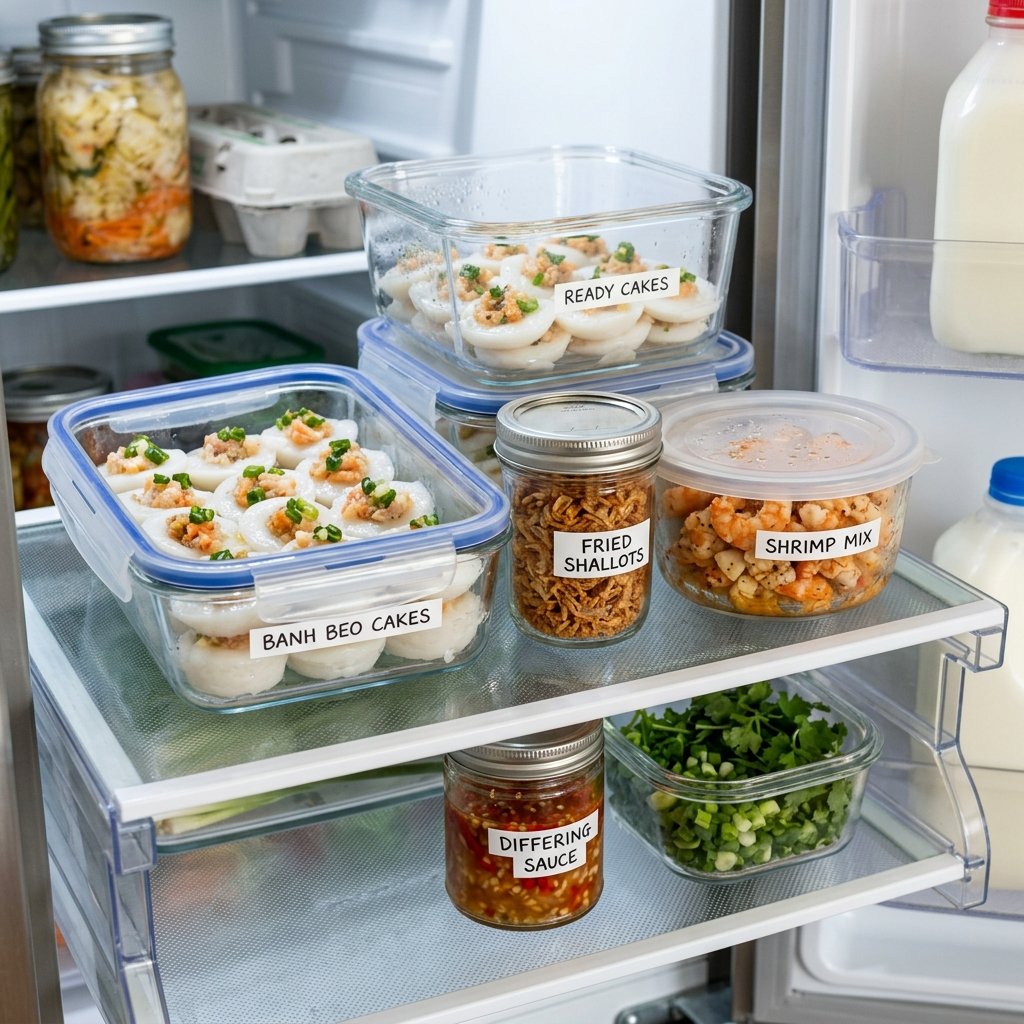
Proper storage extends the life of your banh beo recipe while maintaining quality between servings. Banh beo stores differently depending on whether you prepare it completely or prepare components separately for assembly.
| Method | Duration | Instructions |
|---|---|---|
| Refrigerate untopped banh beo | Up to two days | Store steamed cakes in an airtight container to prevent drying. Cover with damp paper towel to maintain moisture. Banh beo dries quickly when exposed to air, so ensure container seals tightly. |
| Freeze banh beo cakes | Up to one month | Freeze steamed, untopped cakes in single layer on baking sheet before transferring to freezer bag. Freezing prevents banh beo cakes from sticking together, making reheating easier. |
| Refrigerate cooked shrimp topping | Up to two days | Store shrimp separately in airtight container. This banh beo component reheats quickly and separately from the cakes for best texture. |
| Reheat frozen banh beo | Eight to ten minutes | Place frozen cakes directly in steamer without thawing first. Steam until heated through, checking that edges are warm to touch. Do not overheat, as excessive steaming toughens banh beo texture. |
| Reheat refrigerated banh beo | Three to five minutes | Steam banh beo in covered steamer or microwave-safe container with damp paper towel. Microwave method takes two minutes on fifty percent power, stirring halfway through heating. |
| Store fried shallots | Up to one week | Keep in airtight container at room temperature to preserve crispness. Never refrigerate fried shallots, as moisture causes rapid deterioration. Toast briefly before using in reheated banh beo. |
Storing banh beo components separately offers flexibility for busy weeks when you want homemade banh beo without intensive cooking. Prepare tapioca cakes ahead and assemble banh beo fresh on serving day for maximum texture and flavor appeal. This make-ahead strategy transforms banh beo from a special occasion dish into convenient weekday dining.
Nutritional Information for Banh Beo
Understanding the nutritional profile of your banh beo recipe helps you make informed dietary decisions and incorporate these cakes into balanced meals. Banh beo combines protein from shrimp with carbohydrates from tapioca flour, creating a nutrient-dense appetizer.
| Nutrient | Amount per Serving |
|---|---|
| Calories | 85 calories |
| Protein | 6 grams |
| Fat | 2 grams |
| Carbohydrates | 12 grams |
| Fiber | 0.5 grams |
| Sugar | 0 grams |
| Sodium | 420 milligrams |
These approximate values reflect a single banh beo cake with standard topping quantities. Individual variations in shrimp size, fish sauce amount, and fried shallot quantity affect total nutrition slightly, but banh beo remains a relatively light appetizer option. The protein content from shrimp makes banh beo satisfying despite modest calorie levels, while tapioca carbohydrates provide energy without excessive heaviness.
Frequently Asked Questions About Banh Beo
Can I make banh beo without a steamer?
You can create banh beo using alternative steaming methods if you lack a traditional bamboo steamer. Place your shallow dishes on a metal rack inside a large pot with water below the rack, then cover tightly with foil to trap steam for adequate banh beo cooking. A microwave-safe container covered with a damp paper towel also produces acceptable banh beo when microwaved on high power for two to three minutes, though traditional steaming creates superior texture.
What is the best way to make banh beo ahead of time?
Prepare banh beo cakes without toppings one to two days ahead and store them in the refrigerator for convenient serving. Keep fried shallots and cooked shrimp in separate containers to maintain maximum crispness and flavor in your banh beo. Assemble banh beo immediately before serving by adding shrimp, fish sauce, and fried shallots to reheat the cakes briefly in the steamer just before plating.
How can I tell when banh beo is perfectly cooked?
Perfectly cooked banh beo appears translucent on the surface and edges with a slightly glossy sheen when you look at the finished cake. The texture should feel tender but cohesive when you gently touch the banh beo, not mushy or overly firm. Test doneness by carefully inserting a toothpick into the banh beo center; it should pass through smoothly with slight resistance rather than crumbling or feeling soupy.
Can I substitute frozen shrimp in my banh beo recipe?
Frozen shrimp works perfectly well in banh beo when you thaw them completely and pat them dry before cooking. Moisture from improperly thawed shrimp creates excess water that dilutes the banh beo seasoning and creates uneven cooking. Thaw frozen shrimp overnight in the refrigerator, then proceed with your banh beo recipe using the same cooking method as fresh shrimp.
What causes banh beo to become too soft or mushy?
Excess steaming time is the primary cause of soft, mushy banh beo cakes that lose their appealing texture. Adding too much water to your banh beo batter also creates overly soft results, as improper ratios prevent proper tapioca gelatinization. Use the recommended banh beo measurements precisely and remove cakes from steamer exactly when the edges appear translucent to prevent texture problems.
Is fish sauce absolutely necessary for authentic banh beo?
Fish sauce is essential for authentic banh beo flavor and cannot be truly replaced with other seasonings that produce identical results. The umami depth and salty, savory punch that fish sauce provides defines Vietnamese banh beo character fundamentally. If you cannot consume fish sauce for dietary reasons, try soy sauce mixed with anchovy paste for the closest approximation, though your banh beo will taste noticeably different from traditional versions.
How do I keep fried shallots crispy on top of banh beo?
Add fried shallots to banh beo immediately before serving to prevent moisture absorption that causes sogginess. Store fried shallots in an airtight container at room temperature away from humidity until you prepare your banh beo. If stored shallots lose crispness, toast them briefly in a dry skillet before adding to your banh beo cakes for texture restoration.
Can I make a vegetarian version of banh beo?
Vegetarian banh beo replaces shrimp with mushroom medley or vegetable topping while keeping all other components unchanged. Sauté finely chopped shiitake, oyster, and button mushrooms with garlic for earthy depth that approaches seafood umami in banh beo. Cook mushroom topping until all moisture evaporates, then proceed with banh beo assembly using fish sauce or vegetarian alternative like soy sauce.
What texture should banh beo have when fully cooked?
Finished banh beo should have tender, slightly chewy texture that holds its shape when you move the cake but feels delicate on your tongue. The exterior edges may be slightly firmer than the center, creating pleasing textural variation throughout your banh beo. Properly cooked banh beo never feels rubbery, dense, or starchy; the tapioca creates a silky smoothness unique to this Vietnamese preparation.
Can I use store-bought fried shallots for my banh beo?
Store-bought fried shallots are excellent for banh beo and save significant preparation time compared to frying shallots from scratch. Choose reputable Asian brands that offer quality, clearly fresh fried shallots with good golden color and aroma. Transfer purchased shallots to airtight containers immediately upon opening your banh beo ingredients to maintain maximum crispness until serving time.
How many banh beo should I serve per person?
Serve two to three banh beo per person as an appetizer, or four to five cakes per person for a light main course. Individual appetites vary, so observe your guests and adjust banh beo quantities based on whether you offer other dishes. One serving recipe yields twelve banh beo, adequate for six appetizer portions or four main course servings depending on your meal structure.
Conclusion
Banh beo recipe cooking rewards your effort with elegant Vietnamese steamed cakes that impress family and friends alike. The combination of tender tapioca base, succulent shrimp, and crispy fried shallots creates unforgettable flavor and texture contrasts that make these cakes special. Your homemade banh beo surpasses restaurant versions because you control ingredient quality and freshness throughout preparation. Whether serving banh beo for special occasions or casual entertaining, this Vietnamese classic deserves a place in your regular cooking rotation. Once you master this banh beo recipe, you will understand why Vietnamese cooks celebrate these delicate, savory cakes as treasured culinary tradition that connects people and cultures through shared meals.
Related Recipes You’ll Love
Jersey Mike’s Chicken Salad Recipe
Lemon Ginger Cucumber Water Recipe
Pink Bariatric Gelatin Recipe
Cucumber-Apple Cooler Recipe
Yuzu Cheesecake Recipe
Rhubarb Apple And Ginger Crumble Recipe
Morning Glory Vegetable Recipe
Expert Resources and Food Safety
For ingredient sourcing, consult The Spice House for quality Asian ingredients and specialty seasonings or check Serious Eats for comprehensive Vietnamese cooking education and recipes.
Print
Banh beo recipe 2026
Banh beo recipe creates delicate Vietnamese steamed shrimp cakes that are a beloved street food and appetizer throughout Vietnam. These small, elegant cakes feature a tapioca flour base topped with seasoned shrimp, crispy fried shallots, and a drizzle of savory fish sauce.
- Total Time: 45 minutes
- Yield: 6 servings (12 cakes) 1x
Ingredients
- 1 cup Tapioca flour
- 1.5 cups Water
- 0.5 teaspoon Salt
- 0.5 pounds Medium shrimp (peeled, deveined, and cut into bite-sized pieces)
- 0.33 cup Fried shallots
- 0.25 cup Fish sauce
- 0.25 cup Fresh cilantro (chopped)
- 2 stalks Green scallions (sliced)
- 1 clove Garlic (minced)
- 0.25 teaspoon White pepper
Instructions
- Combine one cup of tapioca flour with one-half teaspoon of salt in a large mixing bowl.
- Add one and one-half cups of room temperature water gradually while stirring constantly to avoid lumps in the banh beo recipe mixture.
- Mix until the batter reaches a smooth consistency similar to pancake batter, about two minutes of stirring.
- Allow the batter to rest for five minutes, which helps the tapioca flour fully hydrate for better banh beo recipe texture.
- Stir again briefly before using, as the tapioca may settle slightly while resting.
- Cut half a pound of shrimp into bite-sized pieces after peeling and deveining them thoroughly.
- Heat one tablespoon of oil in a small skillet over medium-high heat for the banh beo recipe shrimp topping.
- Add minced garlic and cook for thirty seconds until fragrant but not browned.
- Add shrimp pieces and cook until they turn pink and opaque, approximately three to four minutes for this banh beo recipe.
- Season with white pepper and a pinch of salt, then remove from heat and set aside to cool slightly.
- Fill twelve small shallow dishes (two to three inches diameter) or ceramic banh beo molds with two tablespoons of batter for each banh beo recipe portion.
- Arrange the filled dishes in a steamer basket, ensuring they do not touch each other to allow even steam circulation.
- Steam over boiling water for twelve to fifteen minutes until the tapioca becomes translucent and slightly glossy on top for proper banh beo recipe texture.
- Remove the steamed cakes from the steamer and allow them to cool for two to three minutes at room temperature.
- Top each banh beo cake with approximately one teaspoon of cooked shrimp while the cakes are still warm.
- Drizzle two teaspoons of fish sauce over each prepared banh beo cake carefully to avoid overflow.
- Sprinkle crispy fried shallots generously over the fish sauce to add essential crunch to your banh beo recipe.
- Garnish with fresh cilantro and sliced scallions just before serving the banh beo.
- Serve the banh beo recipe immediately while the cakes are still warm and the fried shallots remain crispy.
Notes
Add the fish sauce topping immediately before serving your banh beo, never in advance, as it causes the fried shallots to soften quickly. Store untopped banh beo cakes in an airtight container in the refrigerator for up to two days, covered with a damp paper towel to maintain moisture.
- Prep Time: 20 minutes
- Cook Time: 25 minutes
- Category: Appetizer
- Method: Steaming
- Cuisine: Vietnamese
Nutrition
- Serving Size: 1 cake
- Calories: 85
- Sugar: 0g
- Sodium: 420mg
- Fat: 2g
- Saturated Fat: 0.3g
- Unsaturated Fat: 1.7g
- Trans Fat: 0g
- Carbohydrates: 12g
- Fiber: 0.5g
- Protein: 6g
- Cholesterol: 30mg