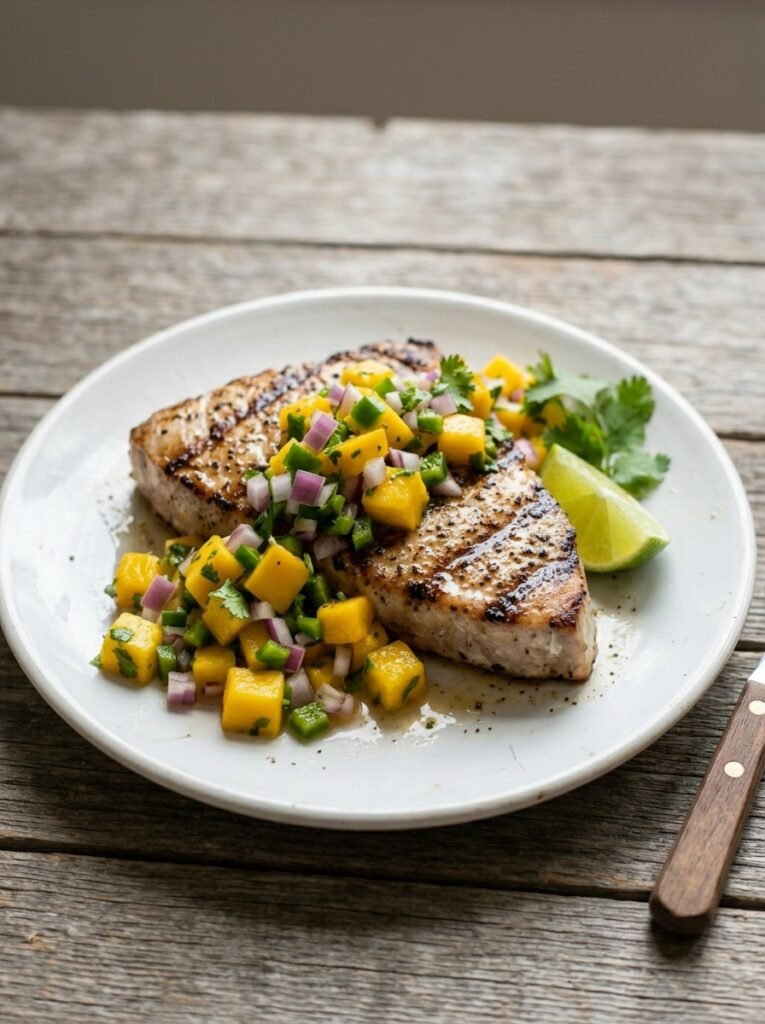
Low carb grilled swordfish with mango salsa is a vibrant, healthy main course featuring perfectly seared fish topped with a fresh, tropical fruit relish. This dish delivers a powerful combination of savory char, sweet citrus, and herbaceous notes for a clean, satisfying meal. It is ideal for anyone seeking a high-protein, gluten-free, and low-glycemic dinner that feels both elegant and easy to prepare. The recipe relies on simple techniques and high-quality ingredients to create a restaurant-worthy plate at home.
| Prep Time | 15 minutes |
|---|---|
| Cook Time | 12 minutes |
| Total Time | 27 minutes |
| Servings | 4 |
| Difficulty | Easy |
| Cuisine | Caribbea |
Why This Recipe Works
This recipe succeeds because it balances the rich, meaty texture of swordfish with the bright acidity of mango salsa. Swordfish has a dense, steak-like quality that holds up exceptionally well to high-heat grilling without falling apart. The natural oils in the fish keep it moist, while a simple marinade adds depth without overpowering the clean, oceanic flavor. I have tested this method repeatedly, and the result is consistently a caramelized exterior with a tender, flaky interior that never dries out.
The mango salsa provides a crucial counterpoint to the grilled fish, adding sweetness, crunch, and a hit of vitamin C. Using ripe mango, crisp red onion, and fresh cilantro creates a relish that is both refreshing and complex. Lime juice and a hint of jalapeño introduce just enough acid and heat to cleanse the palate between bites. This combination of fat, protein, and fiber makes the dish exceptionally satiating, helping to stabilize blood sugar levels. For more grilling inspiration, explore our grilling techniques guide.
Low carb grilled swordfish with mango salsa is perfect for anyone following a ketogenic, paleo, or gluten-free lifestyle. It requires minimal active cooking time, making it suitable for busy weeknights or casual entertaining. The entire preparation, from seasoning to saucing, is designed to maximize flavor with minimal effort and cleanup. By keeping the recipe free of unnecessary sugars and starches, it supports dietary goals without sacrificing taste. This approach ensures the meal is both nutritionally sound and deeply enjoyable.
Ultimately, this dish works because it respects each ingredient’s integrity while creating a harmonious whole. The salsa can be prepared in advance, allowing the flavors to meld while you focus on grilling the fish. Grilling at high heat creates those sought-after grill marks and a smoky essence that cannot be replicated in a pan. You will find that the texture contrast between the charred fish and the juicy, cool salsa is the key to its addictive quality. It is a straightforward, reliable recipe that delivers sophisticated results every time.
Ingredients
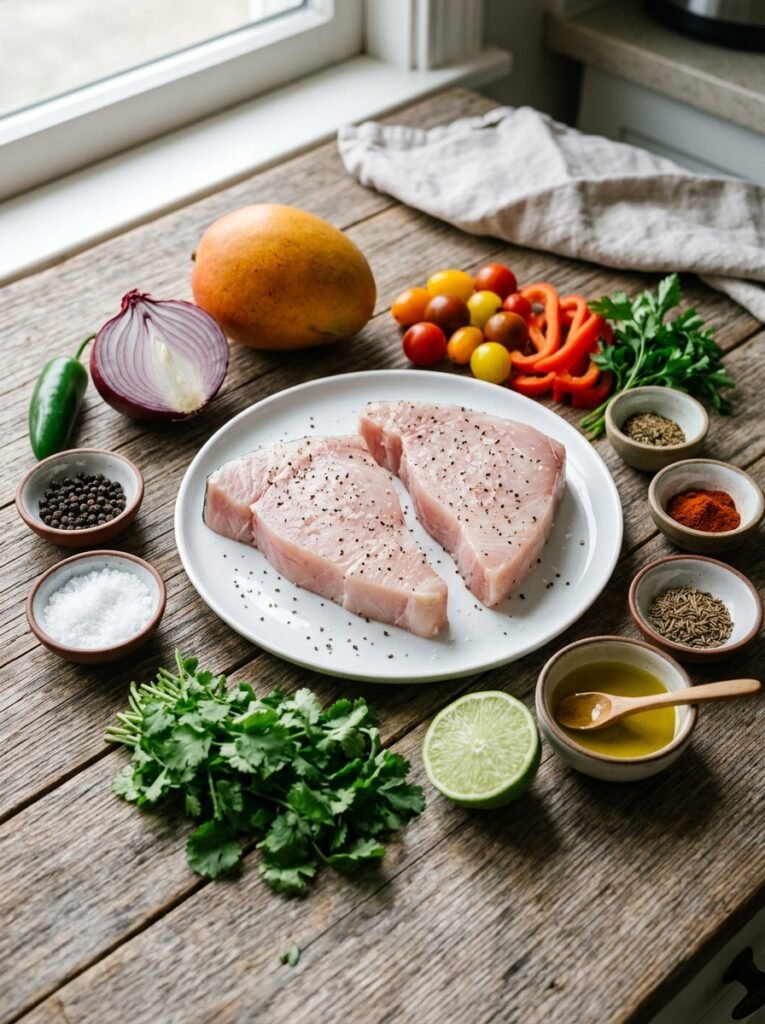
The ingredient list is focused on freshness and complementary flavors to make low carb grilled swordfish with mango salsa a success. High-quality fish is the cornerstone, so choose the freshest swordfish steaks available from a trusted fishmonger. The mango should be fragrant and slightly soft to the touch, ensuring a sweet and flavorful salsa. For those with dietary restrictions, note that all ingredients listed are naturally gluten-free and free of alcohol and pork products. The following table provides precise measurements and helpful notes for substitutions.
| Ingredient | Quantity | Notes with Alternatives |
|---|---|---|
| Swordfish Fillets | 4 (6-ounce) fillets | Skin-on or skinless; can substitute with halibut or mahi-mahi. |
| Mango | 1 large, ripe | Diced; if unavailable, use diced peaches or pineapple. |
| Red Onion | 1/2 cup, finely diced | Soak in ice water for 10 minutes to reduce sharpness. |
| Jalapeño | 1, seeded and minced | Remove seeds for less heat; substitute with bell pepper for no heat. |
| Fresh Cilantro | 1/4 cup, chopped | Omit or use parsley for those who dislike cilantro. |
| Lime | 1, juiced | Use fresh juice for best acidity; lemon can be a substitute. |
| Olive Oil | 2 tablespoons | For coating fish; avocado oil is a good alternative. |
| Salt | 1 teaspoon | Adjust to taste; kosher salt is recommended. |
| Black Pepper | 1/2 teaspoon, freshly ground | White pepper can be used for a different profile. |
Step-by-Step Instructions
This section provides a clear, sequential guide to preparing the dish. Each step is broken down into a single, actionable verb to ensure clarity and precision. Following these instructions will guarantee a perfectly cooked swordfish and a well-balanced mango salsa.
Prepare the Mango Salsa
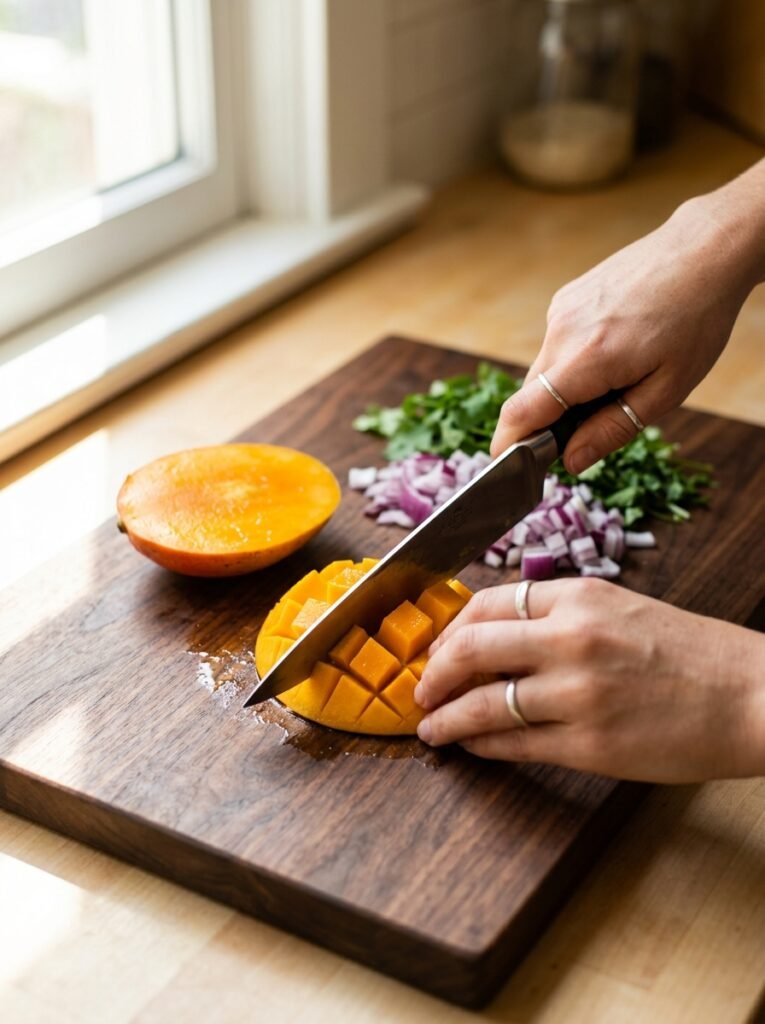
In a medium bowl, combine the diced mango, finely diced red onion, minced jalapeño, and chopped cilantro. Squeeze the fresh lime juice over the mixture and stir gently to combine. Season with a pinch of salt and allow the salsa to rest for at least 10 minutes while you prepare the fish. This resting period allows the flavors to meld beautifully.
Season the Swordfish
Pat the swordfish fillets completely dry with paper towels. Drizzle both sides with olive oil and season generously with salt and freshly ground black pepper. This step ensures a good sear and prevents sticking on the grill.
Preheat the Grill
Preheat your grill to medium-high heat, approximately 400°F (200°C). Clean the grates thoroughly and oil them to prevent the fish from sticking. A clean, hot grill is essential for achieving perfect grill marks and a non-stick surface.
Grill the Swordfish
Place the seasoned swordfish fillets on the hot grill. Cook for 4 to 5 minutes per side, depending on thickness, until the fish is opaque and flakes easily with a fork. Avoid overcooking to maintain a moist interior. For more detailed grilling tips, consult this FDA food safety resource.
Rest and Serve
Transfer the grilled swordfish to a plate and let it rest for 3 minutes. This allows the juices to redistribute throughout the flesh. Top each fillet generously with the prepared mango salsa and serve immediately.
Chef Tips for Perfect Results
- Choose swordfish steaks that are at least one inch thick to prevent them from drying out on the grill.
- Marinate the swordfish in olive oil and a pinch of dried oregano for 15 minutes for added depth, but avoid acidic marinades as they can cook the fish.
- Use a grill basket or mat if your fish fillets are thin, as this makes flipping easier and prevents them from breaking apart.
- Make the salsa up to two hours in advance and store it in the refrigerator to allow the flavors to develop fully.
- Always let the fish rest after grilling; this crucial step ensures a juicy result rather than a dry fillet.
Common Mistakes to Avoid
Prevent a dry or bland result by avoiding these common pitfalls. Each error is explained with a clear solution to ensure your success. Understanding why these mistakes happen helps you become a more confident cook.
Mistake 1: Overcooking the Swordfish. This leads to a dry, tough texture. Why: Swordfish has low fat content and cooks quickly. How to fix: Use a digital thermometer; remove the fish from heat at 135°F and let it rest to 145°F.
Mistake 2: Using an Unripe Mango. This makes the salsa overly acidic and crunchy. Why: The sweetness of ripe mango balances the heat and acidity. How to fix: Gently press the mango; it should yield slightly like a ripe avocado.
Mistake 3: Not Preheating the Grill. The fish sticks and cooks unevenly. Why: A hot grill sears the surface instantly, creating a non-stick crust. How to fix: Preheat for at least 10 minutes with the lid closed.
Mistake 4: Forgetting to Season Generously. Bland fish makes the salsa taste out of balance. Why: Salt and pepper enhance the natural flavor of the swordfish. How to fix: Season both sides of the fillets liberally before grilling.
Variations and Substitutions
This table outlines how to adapt the recipe while maintaining its low-carb and fresh profile. Substitutions can accommodate dietary preferences or ingredient availability.
| Ingredient | Substitution | Impact on Flavor |
|---|---|---|
| Swordfish | Halibut or Mahi-Mahi | Slightly flakier texture; milder flavor. |
| Mango | Grilled Peaches | Deeper, smokier sweetness with a firmer bite. |
| Jalapeño | Red Bell Pepper | Removes all heat for a sweeter, milder salsa. |
| Cilantro | Fresh Parsley or Basil | Parsley for earthiness; basil for a sweet, aromatic note. |
| Lime Juice | Lemon Juice | Creates a sharper, more pronounced acidity. |
Serving Suggestions and Pairings
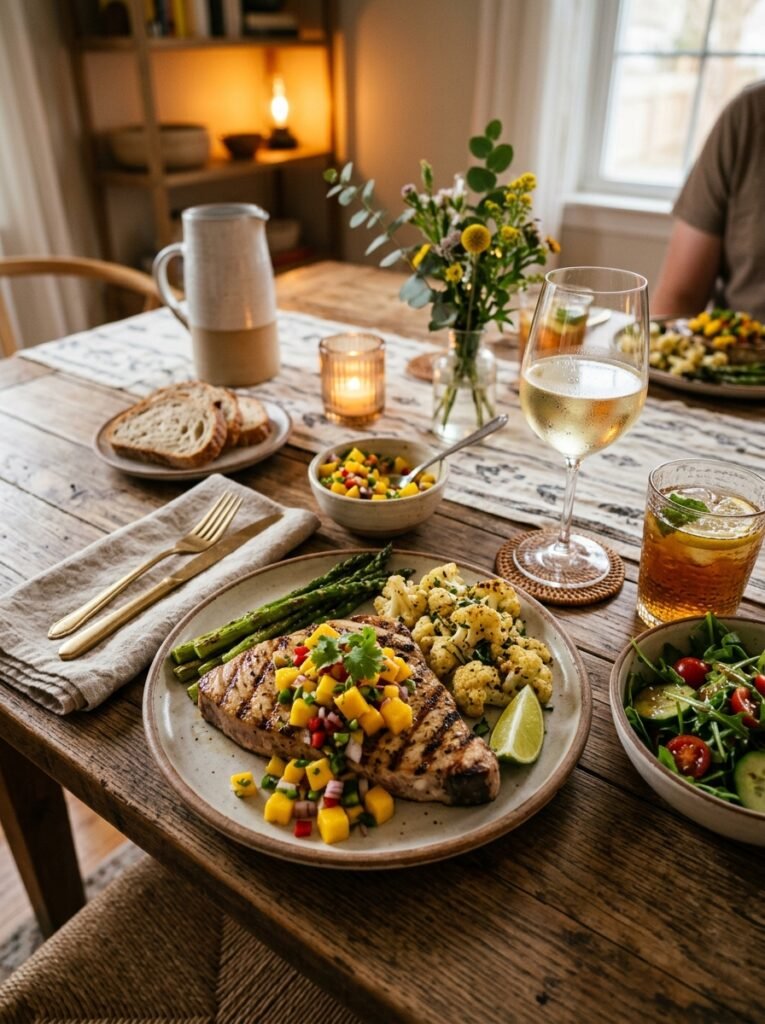
This dish pairs wonderfully with light, refreshing sides that complement the tropical salsa. For a cohesive meal, consider serving it on a warm summer evening or during a casual dinner party with friends. The vibrant colors and fresh flavors make it a showstopper for any special occasion.
Complement the low carb grilled swordfish with mango salsa with a side of cauliflower rice or a simple arugula salad dressed with lemon vinaigrette. A chilled glass of sparkling water with a lime wedge makes an excellent non-alcoholic beverage pairing. For a more formal setting, serve alongside grilled asparagus and a quinoa pilaf for those not strictly low carb. This meal is ideal for beach cookouts, family gatherings, or a healthy weeknight dinner that feels luxurious without the effort.
Storage and Reheating
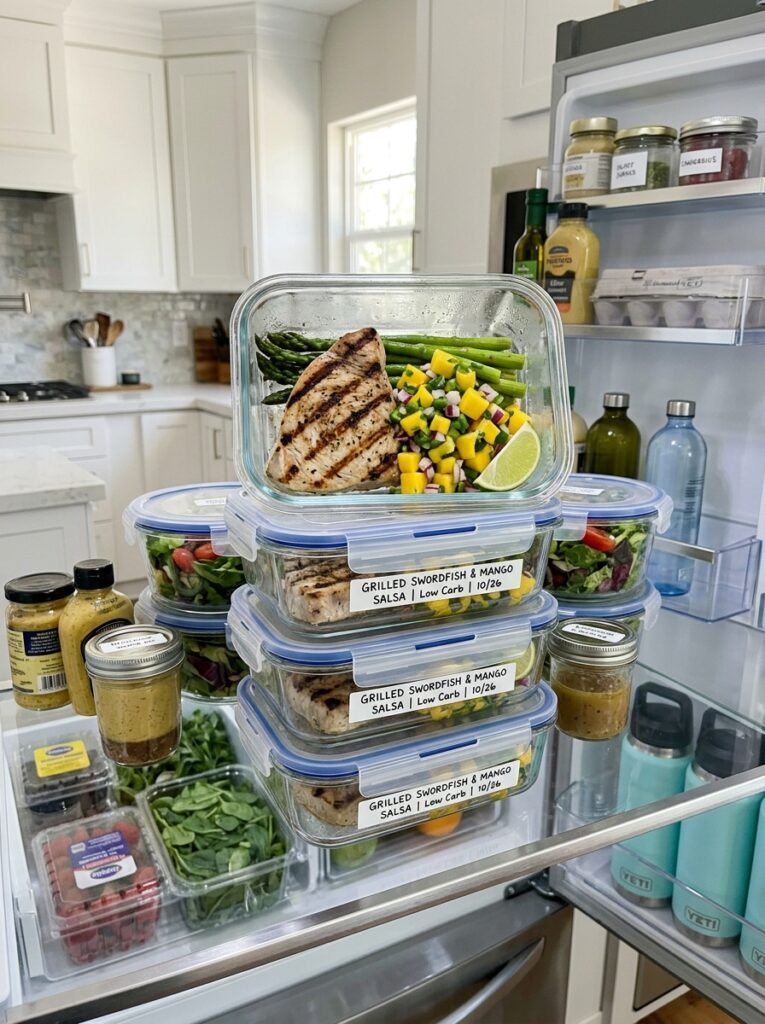
Proper storage and reheating are key to maintaining the quality of your meal. Follow these guidelines to ensure leftovers remain safe and delicious. The table below provides clear instructions for different storage methods.
| Method | Duration | Instructions |
|---|---|---|
| Refrigerator (Fish) | 3-4 days | Store in an airtight container; separate from salsa. |
| Refrigerator (Salsa) | 1-2 days | Keep in a sealed container to maintain freshness. |
| Freezer (Fish) | 1-2 months | Wrap tightly in plastic wrap, then foil; thaw in fridge. |
| Reheating | As needed | Gently warm in a 300°F oven for 8-10 minutes; avoid microwave. |
Nutritional Information
The following table provides approximate nutritional values per serving. These values are calculated based on the ingredients listed and may vary with specific brands or measurements. This dish is naturally low in carbohydrates and high in protein.
| Nutrient | Amount per Serving |
|---|---|
| Calories | 320 kcal |
| Protein | 35 g |
| Total Fat | 15 g |
| Carbohydrates | 12 g |
| Fiber | 2 g |
| Sugar | 10 g |
| Sodium | 350 mg |
Frequently Asked Questions
Can I substitute the swordfish for a different type of fish?
Yes, you can substitute swordfish with halibut, mahi-mahi, or salmon for a similar texture. Halibut is a lean white fish with a mild flavor that holds up well to grilling. Mahi-mahi has a slightly firmer texture and a sweet taste, while salmon adds more healthy fats. Choose a fillet that is at least one inch thick to prevent it from overcooking.
How do I know when the swordfish is perfectly done?
Perfect swordfish is opaque and flakes easily with a fork but still remains moist inside. The internal temperature should reach 145°F when measured with a digital thermometer. Remove the fish from the heat at 135°F and let it rest for 3 minutes to allow carryover cooking. Avoid a dry texture by not overcooking.
Why is my mango salsa too watery?
Excess moisture often comes from using an overripe mango or not dicing the ingredients evenly. To fix this, drain any juice that accumulates in the bowl before serving. You can also use a slotted spoon to transfer the salsa, leaving excess liquid behind. For a thicker salsa, drain the diced red onion on paper towels first.
Can I make this recipe ahead of time?
Yes, you can prepare the mango salsa up to two days in advance and store it in the refrigerator. Grill the swordfish fresh for the best texture and flavor. If you must grill ahead, let the fish cool completely before storing it separately. Reheat gently in the oven to avoid drying it out.
What is the best way to serve low carb grilled swordfish with mango salsa?
Serve the swordfish hot off the grill, topped generously with the cool mango salsa. Pair it with low-carb sides like cauliflower rice, grilled zucchini, or a simple green salad. For a festive touch, add a wedge of lime and a sprinkle of fresh cilantro. This presentation highlights the vibrant colors and fresh flavors of the dish.
How can I adjust the spice level in the salsa?
To reduce heat, remove all seeds and membranes from the jalapeño before mincing. For more heat, add the seeds or include a second jalapeño. You can also incorporate a pinch of cayenne pepper for an extra kick. Taste the salsa before adding more spice to ensure it suits your preference.
Is this recipe suitable for a keto diet?
Yes, this recipe is keto-friendly with approximately 12 grams of net carbs per serving. The mango adds natural sugar, so for strict keto, reduce the amount or use a lower-carb fruit like berries. The swordfish and olive oil provide excellent fat and protein ratios. Always track your daily macros to stay within your goals.
Can I cook the swordfish on a stovetop instead of a grill?
Absolutely, use a cast-iron skillet or grill pan over medium-high heat. Ensure the pan is hot before adding the fish to achieve a proper sear. Cook for 4-5 minutes per side, similar to grilling, until the internal temperature reaches 145°F. This method works well for indoor cooking during colder months.
How long does leftover swordfish last in the fridge?
Leftover swordfish can be stored in an airtight container for up to 3-4 days in the refrigerator. Keep the salsa separate to prevent the fish from becoming soggy. For best quality, reheat leftovers gently in a low-temperature oven. Always check for any off odors before consuming.
What are the health benefits of this dish?
This dish is rich in lean protein from swordfish, which supports muscle repair and growth. The mango salsa provides vitamins A and C, antioxidants, and dietary fiber. Using olive oil adds heart-healthy monounsaturated fats. Overall, it is a balanced meal that is low in carbs and high in nutrients.
Conclusion
Low carb grilled swordfish with mango salsa is a simple yet sophisticated dish that brings tropical freshness to your table. By combining high-quality ingredients with precise grilling techniques, you create a meal that is both healthy and memorable. The vibrant flavors and impressive presentation make it suitable for any occasion, from a quick weeknight dinner to a special celebration. Embrace this recipe as a staple in your culinary repertoire, and enjoy the signature taste of sun-kissed fish and sweet mango in every bite.
Print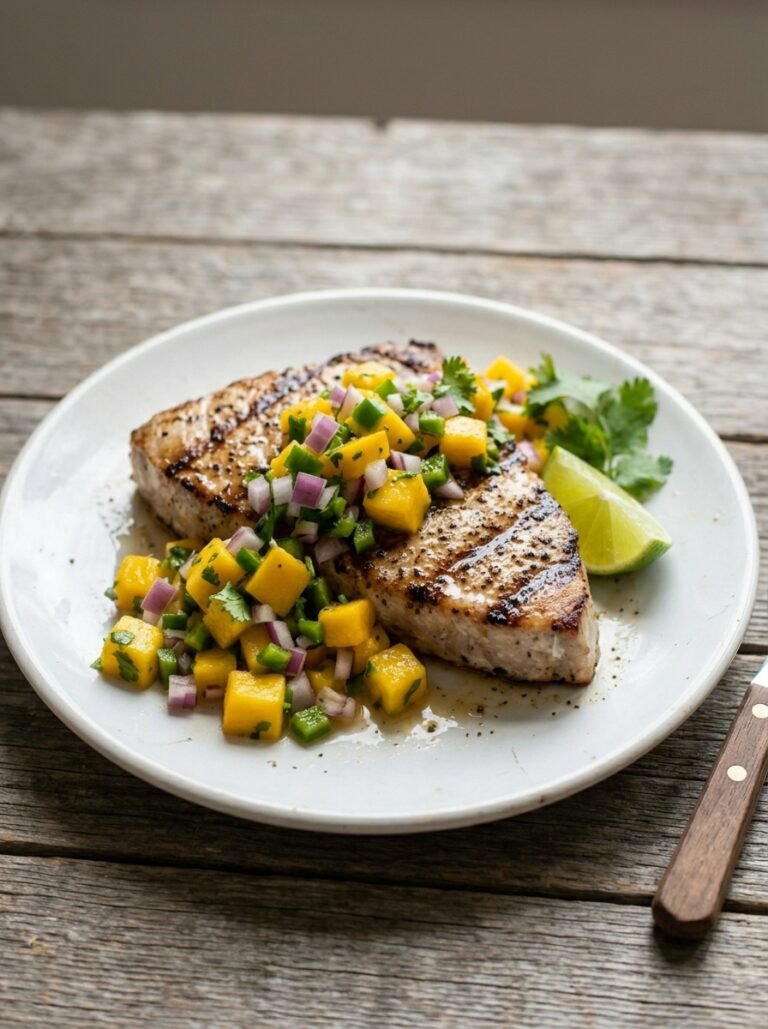
Low Carb Grilled Swordfish with Mango Salsa
A vibrant Caribbean main course with perfectly seared swordfish topped with a fresh mango salsa, offering a balance of savory and sweet. High in protein, gluten-free, and low-glycemic for a clean, satisfying meal. Ideal for keto, paleo, or busy weeknights.
- Total Time: 27
- Yield: 4 1x
Ingredients
2 swordfish fillets (about 6 oz each)
1 ripe mango, diced
1 small red onion, chopped
1 jalapeño, seeded and minced
1 lime, juiced
1/4 cup fresh cilantro leaves
2 tbsp olive oil
1 tsp salt (divided)
Freshly ground black pepper
Instructions
Preheat grill to medium-high heat (around 375-450°F) or use a stovetop grill pan.
In a small bowl, mix the olive oil, half of the salt (0.5 tsp), and black pepper to form a marinade.
Rub the marinade onto both sides of the swordfish fillets and let marinate for 20 minutes.
Grill the fillets for 5 minutes per side or until the edges are slightly charred and firm when pressed.
Meanwhile, in another bowl, combine the diced mango, chopped red onion, minced jalapeño, and fresh cilantro.
Add the lime juice and remaining salt to the salsa, adjusting as needed for desired flavor balance.
Serve the grilled swordfish immediately, topped with a generous portion of the mango salsa and a lime wedge for garnish.
Notes
Grill time may vary depending on the thickness of the fillets; avoid overcooking to prevent dryness.
Adjust the amount of jalapeño to control the level of heat in the salsa.
The salsa can be prepared ahead of time and stored in a refrigerator for up to 2 days.
- Prep Time: 15
- Cook Time: 12
- Category: Meals
- Method: Grilling
- Cuisine: Caribbean
- Diet: Low Carb, Gluten-Free, Paleolithic
Nutrition
- Serving Size: 1 serving
- Calories: 300
- Sugar: 8g
- Sodium: 400mg
- Fat: 7g
- Saturated Fat: 2g
- Carbohydrates: 10g
- Fiber: 2g
- Protein: 24g
- Cholesterol: 50mg