Rose tteokbokki recipe creates a stunning pink variation of Korea’s beloved spicy rice cake street food by incorporating gochujang paste, tomato, and rose petals or beet juice into the sauce. This rose tteokbokki recipe transforms the traditional dish into an Instagram-worthy meal that tastes just as delicious as it looks. The combination of chewy rice cakes coated in a vibrant, slightly sweet and savory sauce makes rose tteokbokki recipe perfect for both casual weeknight dinners and special gatherings. Unlike the classic red version, this pink iteration offers a milder heat level while maintaining the authentic Korean flavors that make this dish so beloved worldwide. Whether you’re a tteokbokki enthusiast or trying this recipe for the first time, rose tteokbokki recipe delivers impressive results from your home kitchen.
| Prep Time | Cook Time | Total Time | Servings | Difficulty | Cuisine |
|---|---|---|---|---|---|
| 15 minutes | 12 minutes | 27 minutes | 2-3 servings | Easy | Korean |
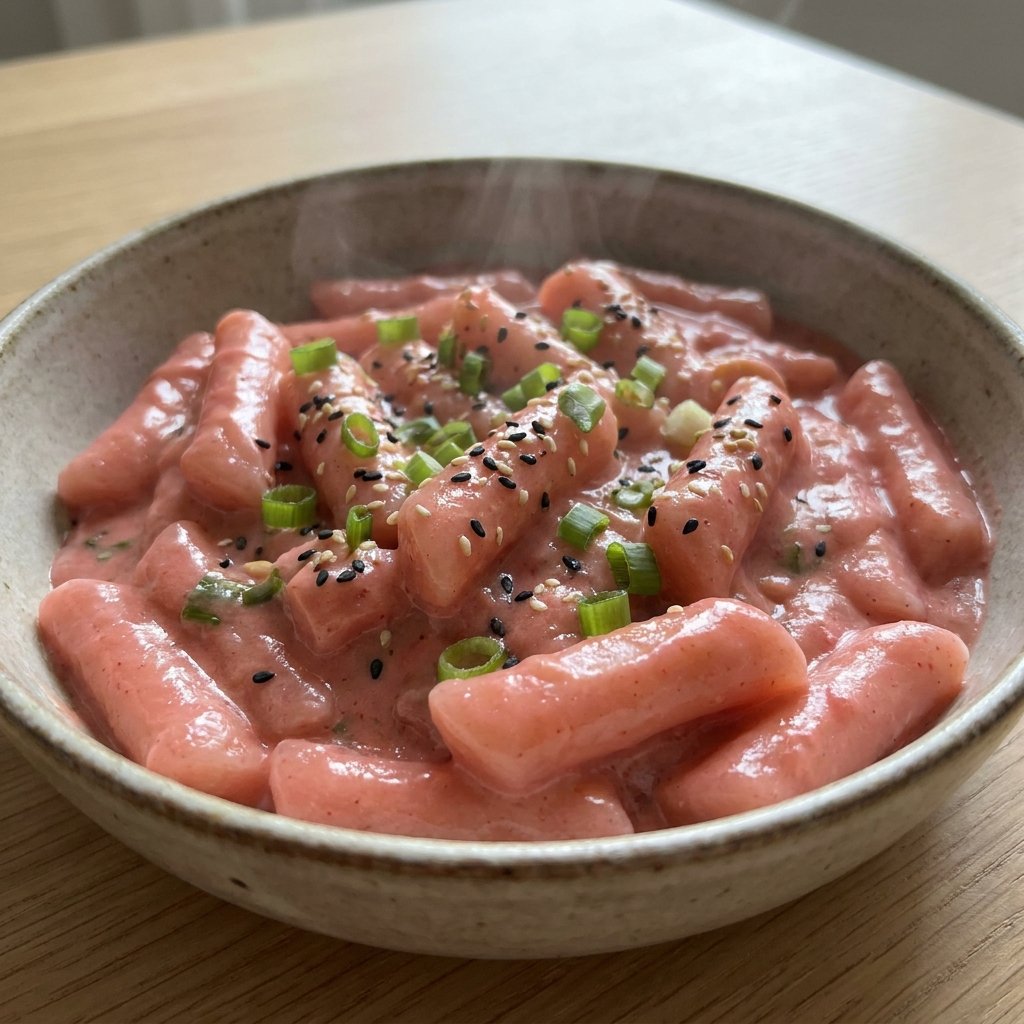
Table of Contents
Table of Contents
Why This Rose Tteokbokki Recipe Works
Rose tteokbokki recipe succeeds because it balances visual appeal with authentic Korean flavors that keep you coming back for more. I discovered that combining gochujang with tomato creates the perfect pink hue while reducing the intense heat of traditional versions. This rose tteokbokki recipe maintains the signature chewiness of the rice cakes while delivering a sauce that coats every piece evenly. The gentle sweetness from the tomato and cream sauce pairs beautifully with the umami depth of gochujang, creating layers of flavor that feel sophisticated yet approachable.
What makes rose tteokbokki recipe particularly special is how forgiving it is for home cooks. The sauce thickens naturally as it cooks, eliminating the guesswork that sometimes trips up beginners with traditional tteokbokki. I find that rose tteokbokki recipe appeals to those who want the aesthetic of a restaurant-quality dish without spending hours in the kitchen. The combination of ingredients in this rose tteokbokki recipe also makes it naturally more photogenic, which means your finished plate will impress family and friends before they even taste it.
Another reason rose tteokbokki recipe has become my go-to choice is the versatility it offers. You can adjust the pink shade by using beet juice or adding more tomato paste to your rose tteokbokki recipe. This rose tteokbokki recipe also works wonderfully for meal prep since the components store separately and come together in minutes. The texture remains consistent whether you eat this rose tteokbokki recipe immediately or reheat it the next day, making it ideal for busy weeknights or planned gatherings.
For anyone hesitant about spicy food, rose tteokbokki recipe provides the perfect entry point into Korean street food. The creaminess of the sauce in this rose tteokbokki recipe tames the heat while the flavors remain complex and interesting. I appreciate that rose tteokbokki recipe doesn’t require specialty kitchen equipment or techniques, just quality ingredients and careful attention to timing.
Rose Tteokbokki Recipe Ingredients
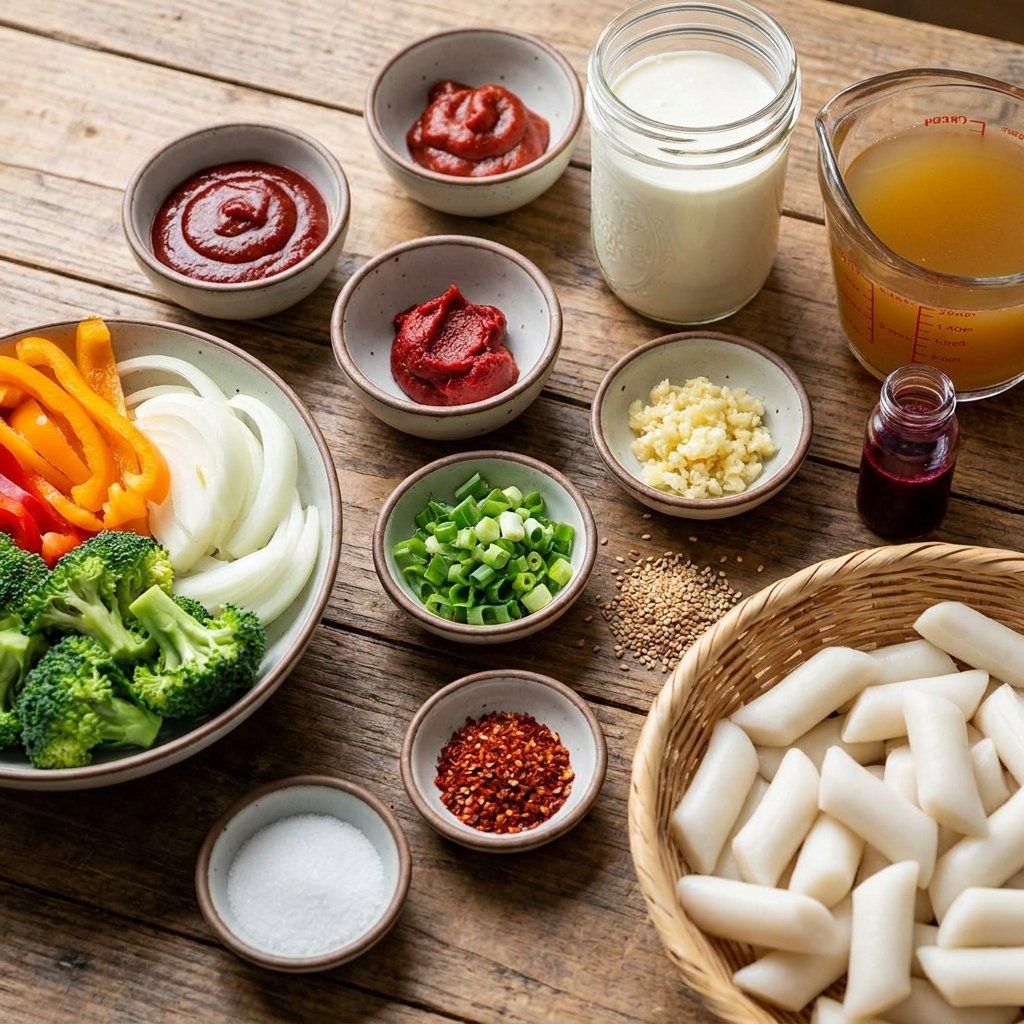
Gathering the right ingredients ensures your rose tteokbokki recipe delivers authentic Korean flavors with that signature pink color.
| Ingredient | Quantity | Notes and Alternatives |
|---|---|---|
| Rice cake (tteok) | 300g (2 cups) | Use fresh or frozen Korean tteok; chewy texture is essential for rose tteokbokki recipe |
| Gochujang (Korean red chili paste) | 2 tablespoons | Non-negotiable for authentic rose tteokbokki recipe; use quality brands |
| Tomato paste | 3 tablespoons | Creates the pink color in rose tteokbokki recipe; use double-concentrated paste |
| Heavy cream or coconut milk | 1/2 cup | Dairy cream adds richness; coconut milk works for dairy-free rose tteokbokki recipe |
| Vegetable broth | 1 cup | Water works but broth adds depth; chicken broth also enhances rose tteokbokki recipe |
| Garlic cloves, minced | 3 cloves | Fresh garlic is crucial for proper rose tteokbokki recipe flavor development |
| Sugar | 1 tablespoon | Balances spice and tomato acidity in rose tteokbokki recipe |
| Salt | To taste | Adjust at the end; essential for seasoning rose tteokbokki recipe properly |
| Green onions (scallions) | 2 stalks | Fresh garnish adds crunch to finished rose tteokbokki recipe |
| Sesame seeds (white or black) | 1 teaspoon | Traditional garnish that adds nutty flavor to rose tteokbokki recipe |
| Vegetable oil | 1 tablespoon | Prevents sticking and aids cooking; use neutral oil for rose tteokbokki recipe |
| Beet juice (optional) | 1-2 tablespoons | Intensifies pink color; substitute tomato paste if unavailable for rose tteokbokki recipe |
The ingredients in rose tteokbokki recipe work together to create a balanced sauce that’s neither too thick nor too thin. I recommend keeping all ingredients prepped before you start cooking since rose tteokbokki recipe comes together quickly once you begin heating the pan.
How to Make Rose Tteokbokki Recipe
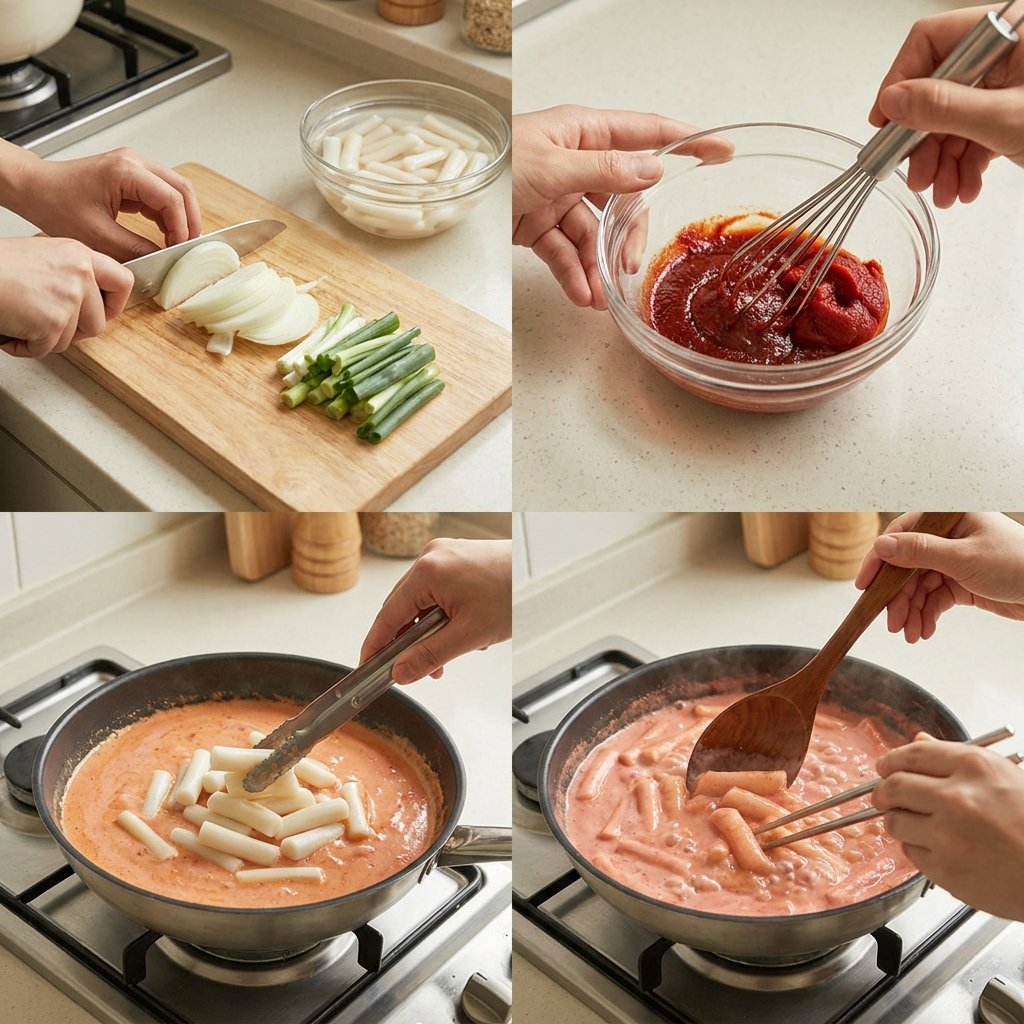
Making rose tteokbokki recipe at home is simpler than restaurant versions yet delivers equally impressive results when you follow these precise steps.
Prepare Your Rose Tteokbokki Recipe Base
- Heat vegetable oil in a large skillet or wok over medium-high heat until shimmering.
- Add minced garlic and stir constantly for 30 seconds until fragrant and toasted.
- Whisk gochujang and tomato paste together in a small bowl to combine, then add to the pan with the garlic.
- Stir the gochujang mixture continuously for 1-2 minutes to deepen the flavors and prevent burning on the bottom of your rose tteokbokki recipe base.
Build Your Rose Tteokbokki Recipe Sauce
- Pour in the vegetable broth slowly while stirring to create a smooth sauce for your rose tteokbokki recipe.
- Add sugar and stir until fully dissolved into the rose tteokbokki recipe liquid.
- Pour in the heavy cream or coconut milk and whisk until the sauce is completely smooth with no lumps throughout your rose tteokbokki recipe.
- Bring the mixture to a simmer and let it bubble gently for 2 minutes to meld all flavors in your rose tteokbokki recipe.
Cook the Rice Cakes in Rose Tteokbokki Recipe
- Add the rice cakes to the simmering rose tteokbokki recipe sauce and stir to coat each piece evenly.
- Cook for 5-7 minutes, stirring occasionally, until the rice cakes become tender and chewy in your rose tteokbokki recipe.
- Taste your rose tteokbokki recipe and adjust salt and sweetness as needed for your preference.
- Add beet juice now if you want to intensify the pink color of your rose tteokbokki recipe.
Finish Your Rose Tteokbokki Recipe
- Transfer your finished rose tteokbokki recipe to a serving bowl or plates.
- Slice green onions and sprinkle over the top of rose tteokbokki recipe.
- Garnish with sesame seeds for the traditional finish to rose tteokbokki recipe.
- Serve your rose tteokbokki recipe immediately while the rice cakes are hot and the sauce coats them perfectly.
Chef Tips for Perfect Rose Tteokbokki Recipe
These professional techniques ensure your rose tteokbokki recipe turns out consistently delicious every single time you make it.
- Toast your gochujang and tomato paste in oil for at least one full minute to unlock deeper flavors in your rose tteokbokki recipe before adding liquid.
- Keep the heat at medium once you add the rice cakes to prevent the sauce from reducing too quickly in your rose tteokbokki recipe.
- Stir gently but frequently throughout cooking to ensure the rice cakes cook evenly and develop the perfect chewy texture in rose tteokbokki recipe.
- Reserve a splash of extra broth to thin the sauce if it thickens too much while cooking your rose tteokbokki recipe.
- Use fresh gochujang from a sealed container or refrigerated section for the best rose tteokbokki recipe results, as older paste can develop off-flavors.
- Add cream gradually to your rose tteokbokki recipe and whisk constantly to prevent lumps from forming in the sauce.
Common Rose Tteokbokki Recipe Mistakes to Avoid
Understanding what goes wrong helps you troubleshoot issues and perfect your rose tteokbokki recipe for consistent success.
Overcooking the Rice Cakes: The most common issue with rose tteokbokki recipe is cooking the rice cakes until they disintegrate rather than maintaining their chewy texture. This happens when heat stays too high or cooking time exceeds 8 minutes. To fix this for your next rose tteokbokki recipe, use medium heat and test the rice cakes after 5 minutes to gauge doneness properly.
Creating a Lumpy Sauce in Rose Tteokbokki Recipe: Lumps form when you add cream to hot gochujang mixture without whisking continuously during rose tteokbokki recipe preparation. Prevent this by pouring cream slowly while stirring constantly, or cool the gochujang base slightly before adding cream to your rose tteokbokki recipe.
Sauce Too Thick in Rose Tteokbokki Recipe: The sauce thickens more than expected when using cream, which can make your rose tteokbokki recipe dry and pasty. Keep extra broth nearby and add it by the tablespoon if this happens during your rose tteokbokki recipe cooking.
Insufficient Pink Color in Rose Tteokbokki Recipe: The sauce looks more orange than pink when you don’t use enough tomato paste or forget to add beet juice to your rose tteokbokki recipe. Use full measurements and adjust the intensity by adding beet juice gradually while tasting throughout the rose tteokbokki recipe process.
Bland Flavors in Rose Tteokbokki Recipe: This results from skipping the garlic-toasting step or not adjusting salt at the end of your rose tteokbokki recipe. Toast garlic until fragrant and always taste your finished rose tteokbokki recipe before serving, adjusting salt as needed.
Best Rose Tteokbokki Recipe Variations and Substitutions
These creative variations keep your rose tteokbokki recipe fresh and exciting while accommodating different tastes and dietary preferences.
| Ingredient | Substitution | Impact on Rose Tteokbokki Recipe Flavor |
|---|---|---|
| Heavy cream | Sour cream or Greek yogurt | Creates tangier profile; adds protein to rose tteokbokki recipe; slightly less rich |
| Vegetable broth | Mushroom or seafood broth | Increases umami depth in rose tteokbokki recipe; builds more complex sauce |
| Tomato paste | Fresh tomato puree or sauce | Lighter flavor; less concentrated tomato taste in rose tteokbokki recipe; thinner sauce |
| Gochujang | Gochugaru (chili flakes) with miso paste | Less depth of flavor; more heat in rose tteokbokki recipe; requires adjusting ratios |
| Sugar | Honey or mirin | Adds floral or caramel notes to rose tteokbokki recipe; creates deeper sweetness |
| Regular tteok | Sweet potato or glass noodles | Changes texture completely; alters traditional rose tteokbokki recipe consistency |
You can also customize your rose tteokbokki recipe by adding vegetables like sliced mushrooms, bell peppers, or baby spinach during the final two minutes of cooking. These additions don’t alter the core rose tteokbokki recipe but make it heartier and more nutritious.
Spicy Variation: Add 1/2 teaspoon gochugaru (Korean red chili flakes) to increase heat without changing the pink color of your rose tteokbokki recipe. Creamy Variation: Use all heavy cream instead of broth for an indulgent rose tteokbokki recipe that tastes like a luxurious restaurant version. Vegan Variation: Replace cream with coconut milk and use vegetable broth to create a plant-based rose tteokbokki recipe that maintains all the original flavors.
Serving Suggestions for Rose Tteokbokki Recipe
Presenting rose tteokbokki recipe with complementary sides and drinks elevates the entire meal experience and satisfies different palates.
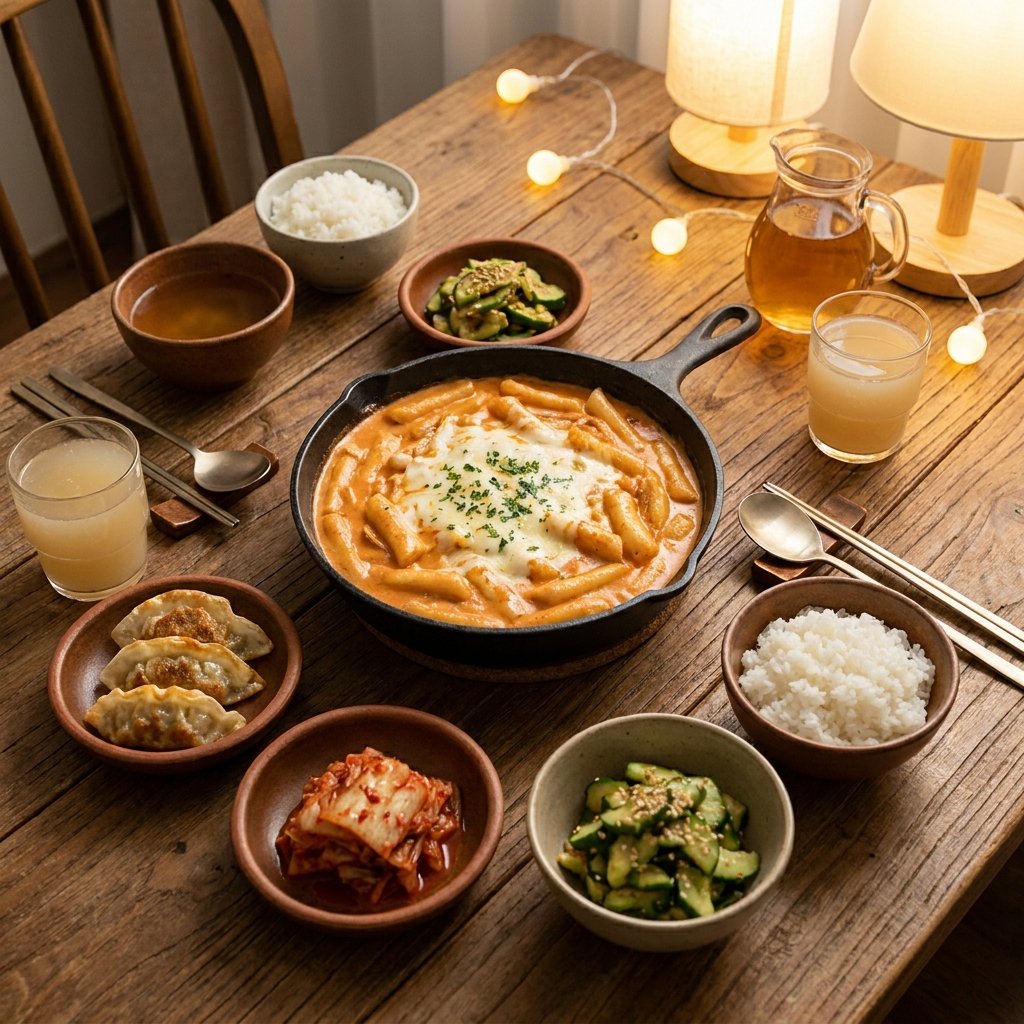
Side Dishes: Serve rose tteokbokki recipe with steamed or fried gyoza dumplings for a complete Korean meal. Kimchi provides a spicy contrast to the creamy rose tteokbokki recipe, while pickled vegetables offer bright acidity. Rice or rice noodles work perfectly alongside rose tteokbokki recipe for those who want additional carbohydrates. Cucumber salad with sesame vinaigrette balances the richness of rose tteokbokki recipe beautifully.
Beverages: Traditional Korean rice wine or non-alcoholic ginger ale complement rose tteokbokki recipe wonderfully. Iced tea with lemon provides refreshing contrast to the warm, creamy sauce in rose tteokbokki recipe. Korean banana milk or honey butter milk drinks add sweetness that pairs with rose tteokbokki recipe’s savory profile.
Occasions: Rose tteokbokki recipe works perfectly for casual weeknight dinners when you want something impressive but quick to prepare. Serve rose tteokbokki recipe at game nights or movie marathons since it’s portable and satisfying. This dish also shines at potlucks and parties since rose tteokbokki recipe looks stunning and tastes delicious served at room temperature or gently reheated.
Toppings: Crispy fried shallots add textural contrast to creamy rose tteokbokki recipe. Crushed peanuts provide nuttiness that complements the sauce perfectly in rose tteokbokki recipe. Fresh cilantro or mint add brightness and freshness to finished rose tteokbokki recipe servings.
Storage and Reheating for Rose Tteokbokki Recipe
Proper storage keeps your rose tteokbokki recipe fresh and ready to enjoy for several days after cooking.
| Storage Method | Duration | Instructions for Rose Tteokbokki Recipe |
|---|---|---|
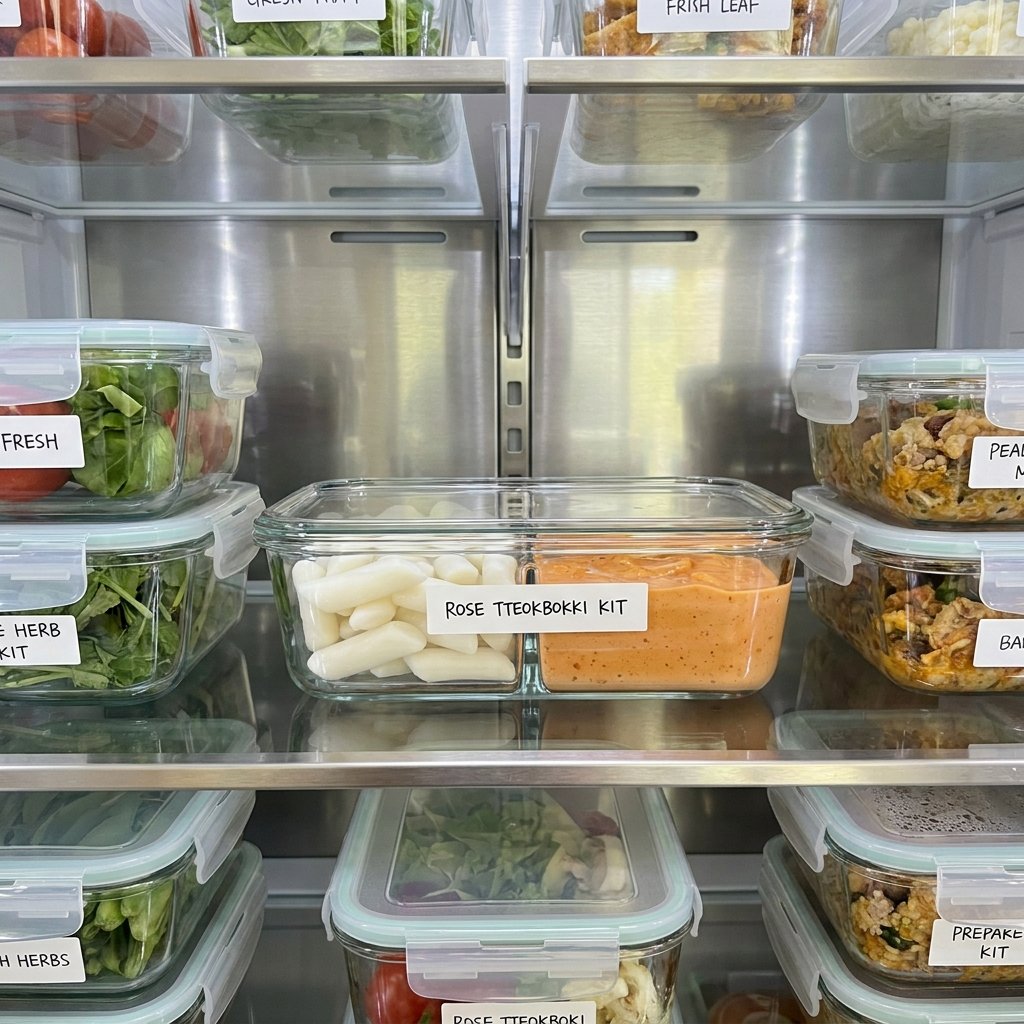
| Refrigerator | 3-4 days | Cool rose tteokbokki recipe completely before transferring to airtight containers; separate sauce and rice cakes if possible |
| Freezer | 2-3 months | Freeze rose tteokbokki recipe in portion-sized containers; sauce freezes better than rice cakes |
| Stovetop Reheating | 5-7 minutes | Add rose tteokbokki recipe to skillet over medium heat, stirring occasionally; add splash of broth if sauce is too thick |
| Microwave Reheating | 2-3 minutes | Transfer rose tteokbokki recipe to microwave-safe container, cover loosely, and heat at 50% power, stirring halfway through |
| Make-Ahead Prep | Up to 1 day | Prepare rose tteokbokki recipe sauce and refrigerate separately from rice cakes; combine and warm when ready to serve |
I recommend storing the sauce and rice cakes separately for your rose tteokbokki recipe since this prevents the cakes from absorbing too much liquid and becoming mushy. When reheating your rose tteokbokki recipe, add a little extra broth or cream if the sauce has thickened too much during storage. The rice cakes in rose tteokbokki recipe may soften slightly after a day or two, but they’ll still taste delicious when gently reheated.
Nutritional Information for Rose Tteokbokki Recipe
Understanding the nutritional profile helps you fit rose tteokbokki recipe into your daily meal planning and dietary goals.
| Nutrient | Amount per Serving |
|---|---|
| Calories | 320-350 kcal |
| Protein | 6-8g |
| Fat | 12-14g |
| Carbohydrates | 42-48g |
| Fiber | 2-3g |
| Sugar | 4-5g |
| Sodium | 580-620mg |
Approximate nutritional values for rose tteokbokki recipe per serving, based on a yield of 2-3 servings. Values may vary depending on specific brands and exact measurements used in your rose tteokbokki recipe. The cream and gochujang contribute most of the calories and fat in rose tteokbokki recipe, while rice cakes provide the bulk of carbohydrates. For a lighter version of rose tteokbokki recipe, use light cream or additional broth to reduce the fat content while maintaining the creamy texture.
Frequently Asked Questions About Rose Tteokbokki Recipe
Can I make rose tteokbokki recipe without gochujang?
Gochujang is essential for authentic rose tteokbokki recipe flavor since no substitute replicates its unique spicy-savory profile precisely. If you absolutely cannot find gochujang, combine equal parts red miso paste and hot sauce, though your rose tteokbokki recipe will taste noticeably different. I strongly recommend sourcing gochujang since rose tteokbokki recipe depends on this ingredient for its signature taste.
How do I know when rose tteokbokki recipe rice cakes are cooked properly?
Perfectly cooked rice cakes in rose tteokbokki recipe should be tender when bitten but still maintain their chewy, slightly bouncy texture. Test them after five minutes by removing one cake and biting into it; they should bend slightly without breaking. If rice cakes are still hard in your rose tteokbokki recipe, cook for another minute and test again until they reach the ideal tender-chewy state.
Why is my rose tteokbokki recipe sauce too thin?
Thin sauce happens when you use too much broth or cream in your rose tteokbokki recipe, or when the sauce hasn’t cooked long enough to reduce. Continue simmering your rose tteokbokki recipe uncovered for another 2-3 minutes to allow liquid to evaporate and thicken naturally. You can also whisk in a slurry of cornstarch and water if you need to thicken rose tteokbokki recipe quickly.
Can I prepare rose tteokbokki recipe the day before serving?
Yes, you can prepare the rose tteokbokki recipe sauce completely and refrigerate it separately from the rice cakes for up to one day before serving. Keep rice cakes stored according to package directions, then combine with the reheated sauce when you’re ready to eat your rose tteokbokki recipe. This make-ahead approach for rose tteokbokki recipe works perfectly for meal prep or entertaining.
What’s the best way to reheat frozen rose tteokbokki recipe?
Thaw rose tteokbokki recipe overnight in the refrigerator first, then reheat gently over medium heat, stirring occasionally and adding broth as needed. Frozen rose tteokbokki recipe typically takes 5-7 minutes to reheat properly without overcooking the rice cakes. For faster reheating of rose tteokbokki recipe, use the microwave at 50% power in 2-minute intervals.
How do I intensify the pink color in my rose tteokbokki recipe?
Add beet juice gradually to your rose tteokbokki recipe during cooking, starting with one tablespoon and increasing until the color reaches your desired pink shade. Increase tomato paste from three to four tablespoons for deeper pink tones in rose tteokbokki recipe. Use the full measurements provided in the original rose tteokbokki recipe instructions since skimping on ingredients results in paler sauce.
Can I make rose tteokbokki recipe gluten-free?
Most gochujang contains barley or other grains, making traditional rose tteokbokki recipe not naturally gluten-free, but certified gluten-free gochujang exists and works perfectly in rose tteokbokki recipe. Verify that all other ingredients including broth are gluten-free before making rose tteokbokki recipe for someone with celiac disease. Always check labels since rose tteokbokki recipe safety depends on ingredient verification.
What can I substitute for heavy cream in rose tteokbokki recipe?
Coconut milk creates an equally creamy rose tteokbokki recipe with slightly different flavor notes that work beautifully with Korean seasonings. Greek yogurt or sour cream produces tangier rose tteokbokki recipe while maintaining creaminess, though you should add these at the end after cooling slightly. Half-and-half makes lighter rose tteokbokki recipe with less fat if you prefer a healthier version.
Is rose tteokbokki recipe spicy, and can I reduce the heat?
Rose tteokbokki recipe is moderately spicy from the gochujang, milder than traditional red tteokbokki because of the cream and tomato that balance the heat. Reduce gochujang to one and a half tablespoons for a gentler rose tteokbokki recipe, or increase cream to three-quarters cup to further mellow the spice. Taste your rose tteokbokki recipe as you cook and adjust spice levels gradually for your preferred heat level.
What are the best beginner tips for making rose tteokbokki recipe successfully?
Read through the entire rose tteokbokki recipe before starting and gather all ingredients within reach for smooth execution. Use medium heat rather than high heat to prevent burning the gochujang base for your rose tteokbokki recipe. Stir frequently but gently throughout cooking to distribute flavors evenly in rose tteokbokki recipe while protecting the rice cakes from falling apart during preparation.
Conclusion
Rose tteokbokki recipe delivers restaurant-quality Korean street food right from your home kitchen with straightforward techniques and readily available ingredients. The combination of creamy sauce, chewy rice cakes, and that beautiful pink color makes rose tteokbokki recipe an impressive dish that looks as stunning as it tastes. I encourage you to make rose tteokbokki recipe soon, adjusting the ingredients to match your preferences for heat level and richness. Whether you serve this rice cake dish to family on a weeknight or impress guests at your next gathering, rose tteokbokki recipe proves that complex-tasting Korean cuisine doesn’t require complicated cooking methods. The signature balance of gochujang’s spicy depth, tomato’s subtle sweetness, and cream’s luxurious texture in rose tteokbokki recipe creates a dish that’s impossible to stop eating once you start.

For more:
Hot Honey Cottage Cheese Sweet Potato Beef Bowl
Chili Crisp Carrot Ribbon Salad Recipe
For comprehensive information about Korean chili paste safety and storage, consult USDA food safety guidelines. Learn more about authentic Korean cooking techniques from trusted Korean recipe resources.
Print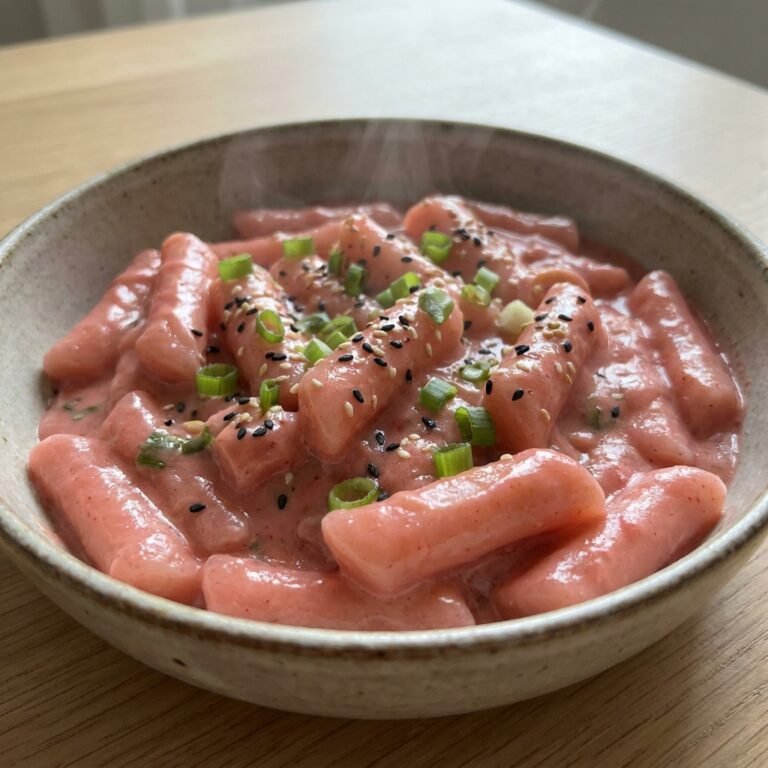
Viral Rose Tteokbokki Recipe 2026
A vibrant Korean twist on classic tteokbokki, rose rice cakes are coated in a glossy, sweet-savory pink sauce made with gochujang, tomato paste, and beet juice or edible rose petals. Perfect for impressing visually while keeping bold, authentic flavors intact.
- Total Time: 27
- Yield: 2–3 servings 1x
Ingredients
400g glass rice cakes (tteok)
3 tbsp gochujang paste
2 tbsp tomato paste
2 tbsp beet juice or 2–3 edible dried rose petals (crushed)
1 tbsp vegetable oil
1 small onion (finely chopped)
2 cloves garlic (minced)
1 medium carrot (julienned)
1/4 tsp salt
1 tbsp sugar
1/2 cup water or broth (vegetarian-friendly)
Green onions and sesame seeds for garnish
Instructions
Bring a pot of water to a boil and blanch rice cakes for 1-2 minutes
Heat oil in a pan, sauté onions, garlic, and carrots until fragrant
Add gochujang, tomato paste, sugar, beet juice, and water; stir until sauce thickens
Return rice cakes to the pan and coat thoroughly in the pink sauce
Simmer 3-5 minutes until rice cakes soften and sauce sticks
Notes
For brighter pink color, blend beet juice into sauce
Adjust gochujang quantity for desired spice level
Use halal-certified vegetable oil for dietary adherence
Tteokbokki can be made ahead and refrigerated for 2-3 days
- Prep Time: 15
- Cook Time: 12
- Category: Meals
- Method: Stovetop Cooking
- Cuisine: Korean
- Diet: Vegetarian
Nutrition
- Serving Size: per serving
- Calories: 450
- Sugar: 12g
- Sodium: 8500mg
- Fat: 18g
- Saturated Fat: 3g
- Carbohydrates: 68g
- Fiber: 3g
- Protein: 6g
- Cholesterol: 0mg