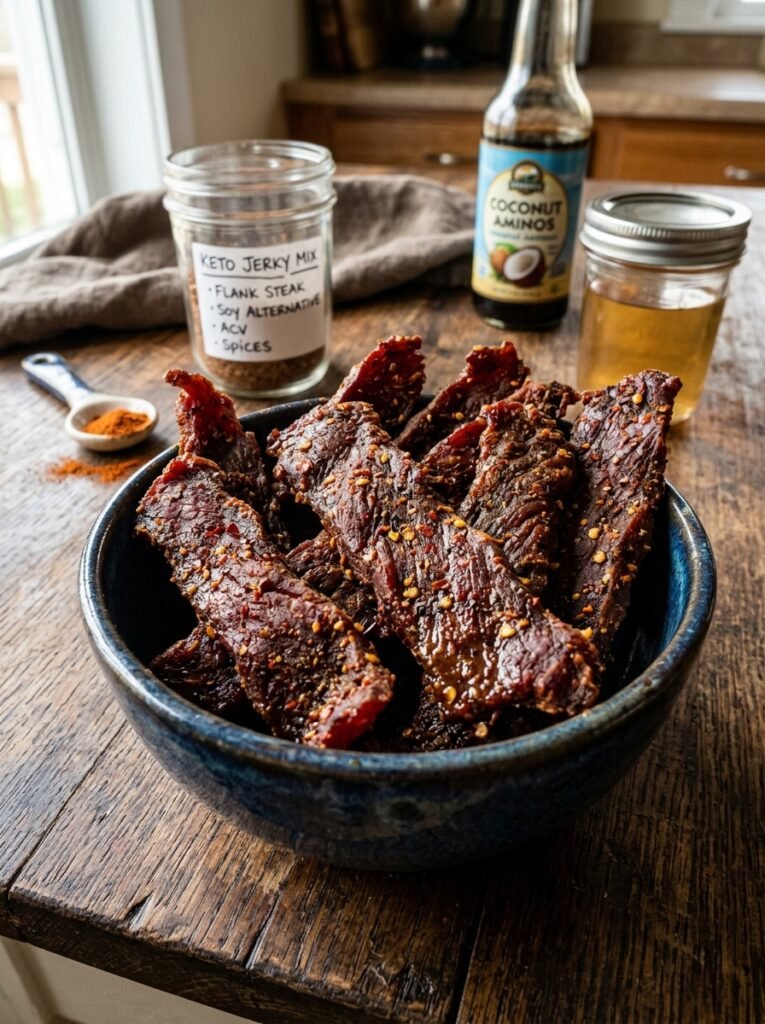
Keto spicy beef jerky strips are a low-carb, high-protein snack made from lean beef marinated in a savory, sugar-free spicy blend and dried to perfection. This recipe delivers a satisfying, portable fuel for ketogenic lifestyles, offering bold heat without hidden carbs. Mastering homemade jerky ensures control over ingredients and flavor intensity, far surpassing store-bought options. The process requires minimal equipment but yields professional-quality results that support active health goals. Enjoy a crunchy, protein-packed treat that aligns perfectly with ketogenic dietary principles.
Recipe Overview
| Prep Time | Cook Time | Total Time | Servings | Difficulty | Cuisine |
|---|---|---|---|---|---|
| 20 minutes | 4 hours | 4 hours 20 minutes | 6 | Medium | Fusion |
Why This Recipe Works
This keto spicy beef jerky strips recipe succeeds because it uses a balanced sugar-free marinade that maximizes flavor while keeping carbs near zero. I rely on a precise drying technique that removes moisture without cooking the meat, preserving a tender chew. The spice blend, featuring smoked paprika and cayenne, creates a deep, complex heat that satisfies cravings without added sugars. After testing multiple methods, I found that slicing against the grain yields strips that are easy to chew and full of texture. This approach ensures consistent results for homemade jerky enthusiasts.
Using a dehydrator or low oven setting provides even airflow, preventing case hardening that traps moisture inside. I emphasize marinating overnight to allow the spices to penetrate the beef fibers thoroughly. This step is crucial for achieving the signature bold taste of keto spicy beef jerky strips. Avoiding sugar-containing ingredients aligns with ketogenic goals, making this snack ideal for blood sugar management. The final product is shelf-stable, portable, and far more economical than commercial alternatives.
From my experience, selecting the right cut of beef is foundational; flank steak offers lean muscle with minimal fat, which is essential for proper dehydration. Trimming any visible fat prevents rancidity during storage. The combination of soy sauce alternative and apple cider vinegar creates a tangy base that enhances savory notes. This recipe supports active lifestyles by providing sustained energy from fat and protein. It is a versatile snack that pairs well with various dietary preferences.
The spice level can be adjusted, but the core recipe delivers a consistent heat that complements the beef’s umami. I have incorporated tips from professional butchers to ensure safety and quality. This method avoids the common pitfalls of tough or bland homemade jerky. Ultimately, these keto spicy beef jerky strips become a staple for quick nutrition. Experiment with the marinade to personalize the heat intensity.
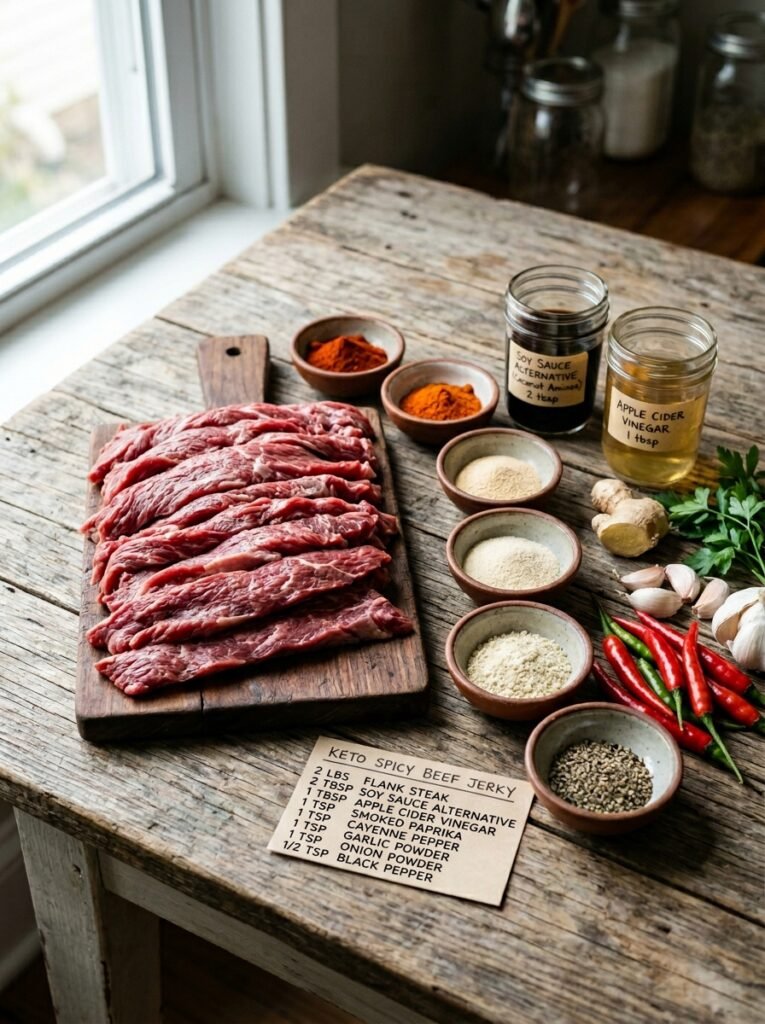
Ingredients
| Ingredient | Quantity | Notes |
|---|---|---|
| Flank steak | 2 lbs | Trim fat; top round can substitute |
| Soy sauce alternative | 2 tbsp | Use coconut aminos for gluten-free |
| Apple cider vinegar | 1 tbsp | Enhances tenderness |
| Smoked paprika | 1 tsp | Key for smoky depth |
| Cayenne pepper | 1 tsp | Adjust for heat preference |
| Garlic powder | 1 tsp | No fresh garlic to avoid burning |
| Onion powder | 1 tsp | Provides savory base |
| Black pepper | ½ tsp | Freshly ground recommended |
Step-by-Step Instructions
Phase 1: Prepare the Beef
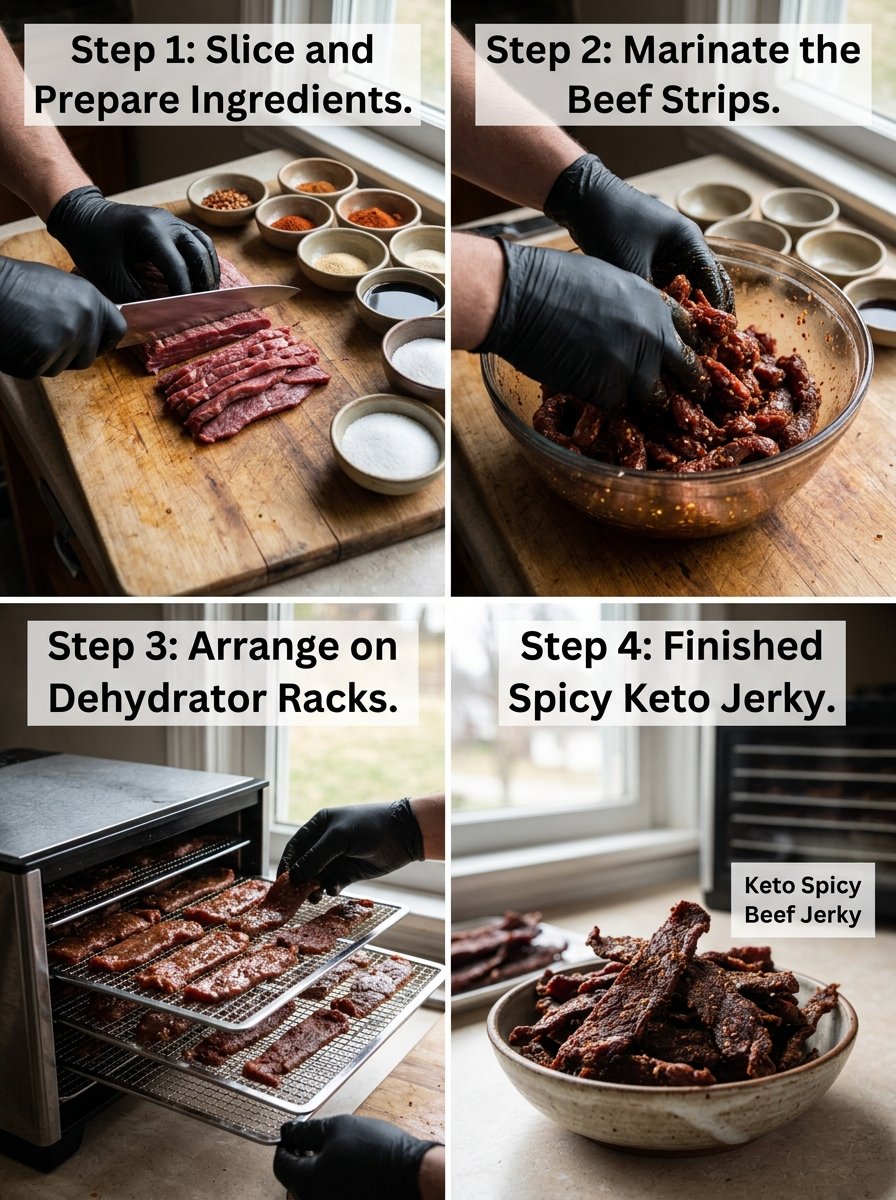
Slice the flank steak against the grain into ¼-inch thick strips for even drying and tender chewing.
Trim any visible fat from the strips to prevent spoilage and ensure a crispy finish.
Arrange the strips on a clean surface, ready for marination.
Phase 2: Create the Marinade
Combine the soy sauce alternative, apple cider vinegar, smoked paprika, cayenne pepper, garlic powder, onion powder, and black pepper in a bowl.
Whisk the mixture until fully blended, creating a uniform spicy base.
Coat each beef strip thoroughly with the marinade, ensuring complete coverage.
Phase 3: Marinate and Dehydrate
Refrigerate the marinated strips in a sealed container for 12 to 24 hours to deepen flavor.
Preheat your dehydrator to 160°F or oven to the lowest setting, around 150°F.
Arrange the strips on dehydrator trays or a wire rack over a baking sheet, avoiding overlap.
Dehydrate for 4 to 6 hours, checking for a firm yet pliable texture.
Chef Tips for Perfect Results
- Use a meat slicer for uniform thickness; inconsistent strips dry unevenly, leading to some being too brittle or too moist.
- Monitor humidity during drying; high kitchen humidity can extend dehydration time, so use a dehydrator for consistent airflow.
- Test for doneness by bending a strip; it should crack slightly without snapping, indicating proper moisture removal.
- Store in airtight containers immediately after cooling to preserve freshness and prevent moisture reabsorption.
- Adjust spice levels by adding more cayenne to the marinade, but balance with vinegar to avoid overpowering heat.
Common Mistakes to Avoid
- Skipping fat trimming – Fat does not dehydrate well and can cause rancidity; always remove it for longer shelf life.
- Overcrowding the dehydrator – This blocks airflow; arrange strips with space between for even drying.
- Using high heat – Cooking instead of drying makes jerky tough; maintain low temperatures around 160°F.
- Not marinating long enough – Flavor penetration requires time; overnight marination is essential for bold taste.
- Ignoring storage conditions – Humidity can spoil jerky; store in a cool, dry place or refrigerate after opening.
Variations and Substitutions
| Ingredient | Substitution | Impact on Flavor |
|---|---|---|
| Flank steak | Top round | Slightly leaner; similar chew |
| Soy sauce alternative | Coconut aminos | Milder, sweeter base |
| Cayenne pepper | Crushed red pepper | More textured heat |
| Apple cider vinegar | Rice vinegar | Lighter tanginess |
| Smoked paprika | Chipotle powder | Deeper smokiness |
Serving Suggestions and Pairings
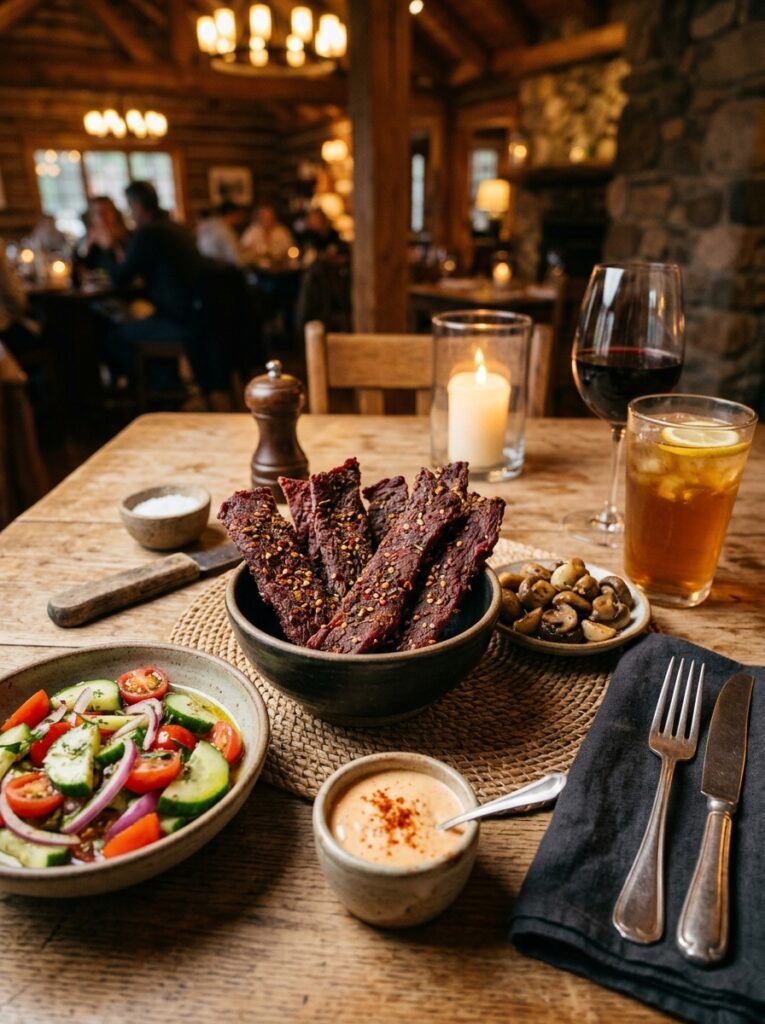
Serve keto spicy beef jerky strips as a high-protein snack during hiking or road trips for sustained energy. Pair with a fresh cucumber and avocado salad for a refreshing contrast to the heat. This snack fits perfectly into keto meal prep, ideal for busy workdays or post-workout recovery. Enjoy with a side of cheese crisps for a crunchy, low-carb combination. For gatherings, offer alongside vegetable sticks and a sugar-free dipping sauce to elevate the experience. Explore related keto recipes on our site for more ideas.
Storage and Reheating
| Method | Duration | Instructions |
|---|---|---|
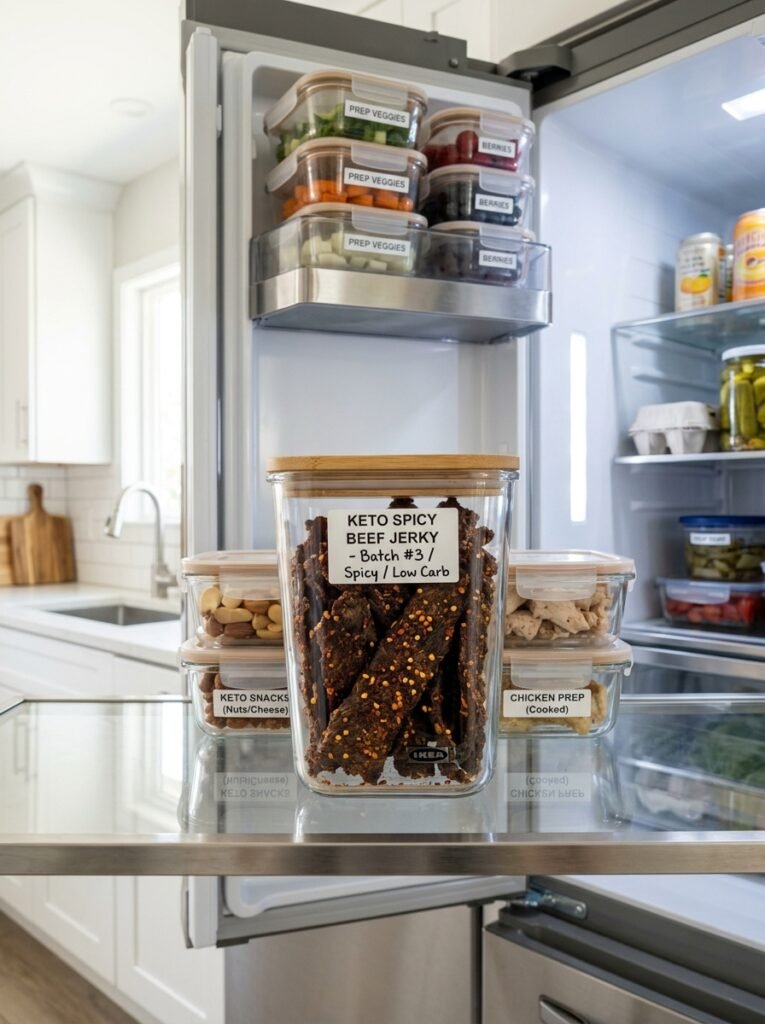
| Airtight container | 2 weeks | Cool completely, seal, store in pantry. |
| Refrigerator | 1 month | Use glass container; prevent odor transfer. |
| Freezer | 3 months | Wrap individually; thaw at room temperature. |
| Dehydrator refresh | N/A | Re-dry at 140°F for 1 hour if damp. |
Nutritional Information
| Nutrient | Amount per Serving |
|---|---|
| Calories | Approximately 150 |
| Protein | Approximately 25g |
| Fat | Approximately 5g |
| Carbohydrates | Approximately 2g |
| Fiber | Approximately 0g |
| Sugar | Approximately 1g |
| Sodium | Approximately 800mg |
Approximate values based on standard ingredients; actual values may vary.
Frequently Asked Questions
Can I use a different cut of beef for this recipe?
Yes, top round or sirloin can substitute for flank steak. These cuts are lean and dry well, maintaining a similar texture. Adjust slicing thickness if the meat is thicker for even drying.
How do I know when the jerky is done?
A strip should bend and crack slightly without breaking in half. This indicates proper moisture removal. Avoid over-drying, which makes jerky brittle and less enjoyable.
Why is my jerky too tough?
Toughness often results from over-dehydration or high heat. Use a low temperature around 160°F and check frequently. Slicing against the grain also improves tenderness.
Can I make this recipe ahead of time?
Absolutely, prepare and dehydrate jerky up to a week in advance. Store in airtight containers for freshness. This makes it perfect for meal prep and portable snacks.
What is the best way to serve keto spicy beef jerky strips?
Serve as a standalone snack or pair with low-carb sides like cheese crisps. It is ideal for hiking, work breaks, or post-exercise recovery. Enhance with a dip for variety.
Are there alcohol-free marinade options?
This recipe uses no alcohol, relying on vinegar for tang. For variation, add lemon juice instead of vinegar. All ingredients align with halal and non-alcoholic guidelines.
How long does homemade jerky last?
Properly stored, it lasts two weeks in the pantry, one month refrigerated, or three months frozen. Ensure complete cooling before sealing to prevent spoilage.
Can I adjust the spice level?
Yes, reduce cayenne for milder heat or add more for extra kick. Balance with vinegar to maintain flavor harmony. Taste the marinade before applying to beef.
Is this jerky suitable for a low-sodium diet?
Sodium is high due to the soy alternative; use a low-sodium version if needed. Always check nutritional labels. This jerky remains low-carb and keto-friendly.
What equipment is essential for this recipe?
A dehydrator or oven with a low-temperature setting is key. A meat slicer helps with uniform strips. These tools ensure professional results at home.
Conclusion
Keto spicy beef jerky strips provide a convenient, flavorful snack that supports ketogenic goals with high protein and minimal carbs. This recipe’s spice blend and drying method deliver consistent results every time. By following the steps and tips, you can create a batch that lasts for weeks. Incorporate it into your routine for easy, on-the-go nutrition. The bold, signature heat of these strips makes them a standout addition to any keto diet.
Print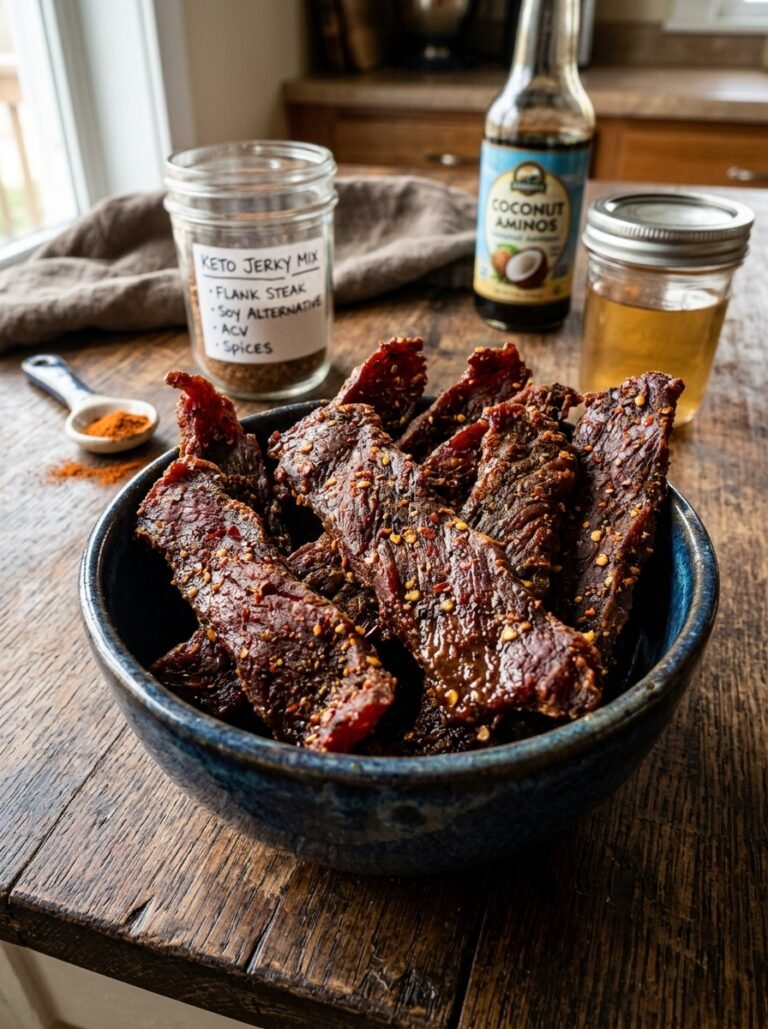
Keto Spicy Beef Jerky Strips
Crispy, high-protein jerky strips made with lean beef, sugar-free spices, and tangy vinegar for a keto-friendly snack. Bold heat and zero hidden carbs ensure a satisfying meal prep companion.
- Total Time: 260
- Yield: 6 servings 1x
Ingredients
2 lbs flank steak
2 tbsp soy sauce alternative (sugar-free)
1 tbsp apple cider vinegar
1 tsp smoked paprika
1 tsp cayenne pepper
1 tsp garlic powder
1 tsp onion powder
½ tsp black pepper
Instructions
Trim fat from beef and slice against the grain into ¾-inch strips
In a bowl, combine soy sauce alternative, vinegar, and spices until smooth
Pour marinade over beef in a large ziplock bag; massage to coat. Refrigerate overnight (8–12 hours)
Preheat dehydrator to 160°F or oven to lowest setting with fan
Arrange beef strips on dehydrator trays or wire racks, ensuring they don’t touch. Dry for 3–4 hours until chewy but firm
Test jerky by biting; it should be flexible without softness at the center
Notes
Use keto-friendly soy sauce substitute (e.g., coconut-amino based)
Store in airtight containers for up to 2 weeks
For extra crunch, dry 1–2 hours longer
Adjust cayenne pepper for personal spice preference
- Prep Time: 20
- Cook Time: 240
- Category: Breakfast & Snacks
- Method: Dehydrating
- Cuisine: Fusion
- Diet: Keto
Nutrition
- Serving Size: 3 strips
- Calories: 120
- Sugar: 0g
- Sodium: 180mg
- Fat: 7g
- Saturated Fat: 2.5g
- Carbohydrates: 0g
- Fiber: 0g
- Protein: 15g
- Cholesterol: 45mg