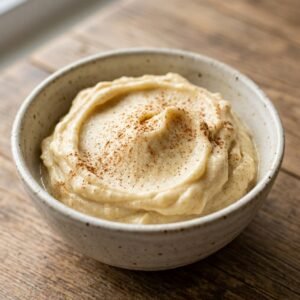
Mango sago pudding recipe delivers a refreshing, creamy tropical dessert that combines silky mango puree with chewy sago pearls suspended in a smooth custard base. This classic Southeast Asian treat features the natural sweetness of fresh mangoes balanced with delicate coconut milk and fragrant vanilla, creating a sophisticated yet simple dessert perfect for warm weather gatherings. The mango sago pudding recipe has become a favorite among home cooks seeking an impressive dessert that requires minimal technical skill and standard pantry ingredients. Whether served chilled at family dinners or presented at special occasions, this mango sago pudding recipe delivers consistent results with authentic tropical flavor that transports your taste buds to island destinations.
| Prep Time | Cook Time | Total Time | Servings | Difficulty | Cuisine |
|---|---|---|---|---|---|
| 15 minutes | 20 minutes | 4 hours (including chill time) | 6 servings | Easy | Southeast Asian |
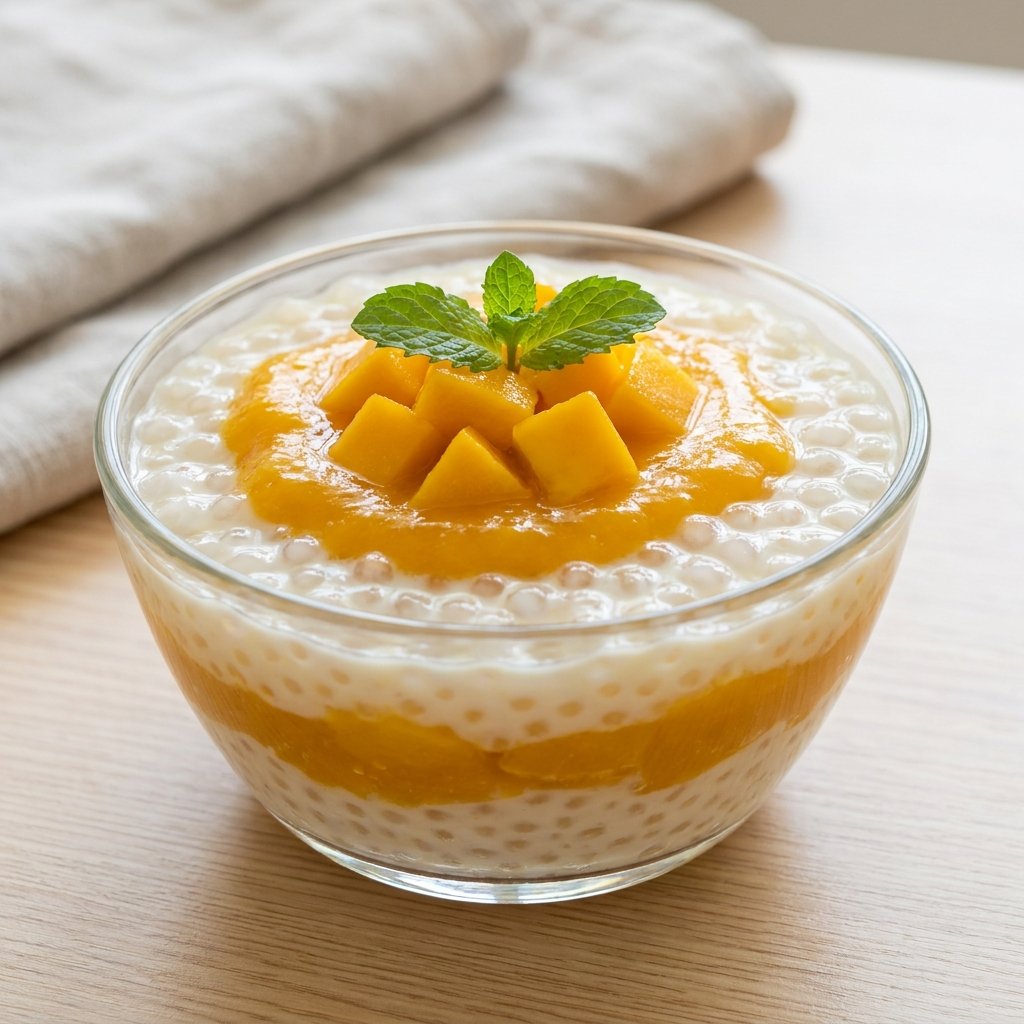
Table of Contents
Table of Contents
Why This Mango Sago Pudding Recipe Works
This mango sago pudding recipe succeeds because it combines three essential elements that create the perfect tropical dessert: natural fruit flavor, appealing texture contrast, and effortless preparation. The fresh mango puree provides vibrant color and authentic taste without requiring complicated technique or special equipment. I have prepared this mango sago pudding recipe dozens of times at home, and it consistently impresses family members and dinner guests with its restaurant-quality appearance and authentic tropical taste.
The sago pearls contribute a distinctive chewy texture that distinguishes this dessert from ordinary puddings and mousse-based treats. These small tapioca spheres absorb the surrounding custard while maintaining their signature bounce, creating a multi-sensory eating experience that keeps people reaching for another spoonful. The mango sago pudding recipe delivers textural variety that elevates the overall dessert experience without adding complexity to the cooking process.
This mango sago pudding recipe proves incredibly reliable because the basic components require minimal precision and forgiving timing. Coconut milk provides richness and authenticity while supporting the delicate mango flavor rather than overpowering it. Vanilla extract and a touch of sugar round out the flavor profile, creating a harmonious balance that appeals to diverse palates and works across different occasions.
Home cooks appreciate this mango sago pudding recipe for its make-ahead flexibility and impressive presentation that requires no last-minute assembly. You can prepare the components hours in advance and simply layer them before serving, making it perfect for busy entertaining schedules. The mango sago pudding recipe deserves a permanent place in your dessert rotation because it delivers consistent excellence with minimal stress.
Mango Sago Pudding Recipe Ingredients
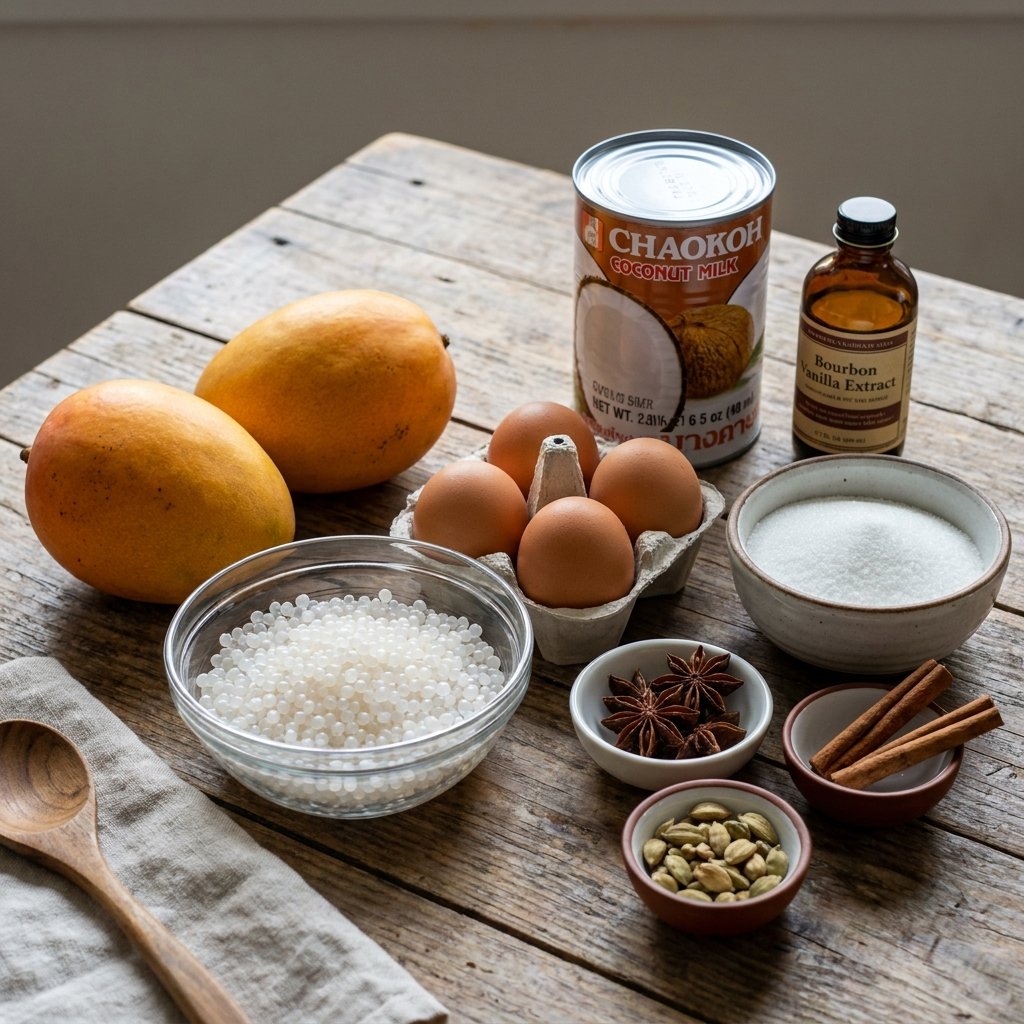
Gathering quality ingredients ensures your mango sago pudding recipe achieves optimal flavor and texture in every serving. Each component plays a specific role in creating the finished dessert, so selecting fresh, high-quality items directly impacts your results.
| Ingredient | Quantity | Notes with Alternatives |
|---|---|---|
| Fresh ripe mangoes | 4 medium (about 2 pounds) | Choose mangoes that yield slightly to gentle pressure. Ataulfo or champagne varieties offer excellent flavor. If fresh mangoes are unavailable, frozen mango puree works well. |
| Small sago pearls | 1 cup | Purchase at Asian markets or online. These tapioca spheres create the signature texture. Pearl tapioca can substitute, though the smaller traditional sago offers better mouthfeel. |
| Whole milk | 1.5 cups | Use full-fat milk for creamy texture. Half-and-half can replace milk for richer results. Plant-based alternatives like coconut milk alone work for vegan versions. |
| Coconut milk (canned) | 1 cup | Select full-fat coconut milk. Light varieties will thin the custard consistency. Shake the can before opening to combine solids and liquid. |
| Egg yolks | 4 large | Room temperature eggs incorporate more smoothly. Pasteurized eggs are recommended if consuming undercooked custard is a concern. |
| Granulated sugar | 3/4 cup | Adjust sweetness based on mango ripeness. If using very sweet mangoes, reduce to 1/2 cup. |
| Vanilla extract | 2 teaspoons | Pure vanilla extract provides superior flavor. Vanilla paste offers concentrated vanilla bean specks for visual appeal. |
| Salt | 1/4 teaspoon | Enhances all flavors without adding detectable saltiness. Essential for flavor balance. |
| Water | 5 cups | Use filtered water for cooking sago to ensure clean flavor. This water is for cooking the sago pearls only. |
Quality mangoes form the foundation of exceptional mango sago pudding recipe results, so invest in fresh, fragrant fruit during peak season. The mango sago pudding recipe relies on pure fruit flavor without artificial additives, making the ingredient quality especially important for authentic taste.
How to Make Mango Sago Pudding Recipe
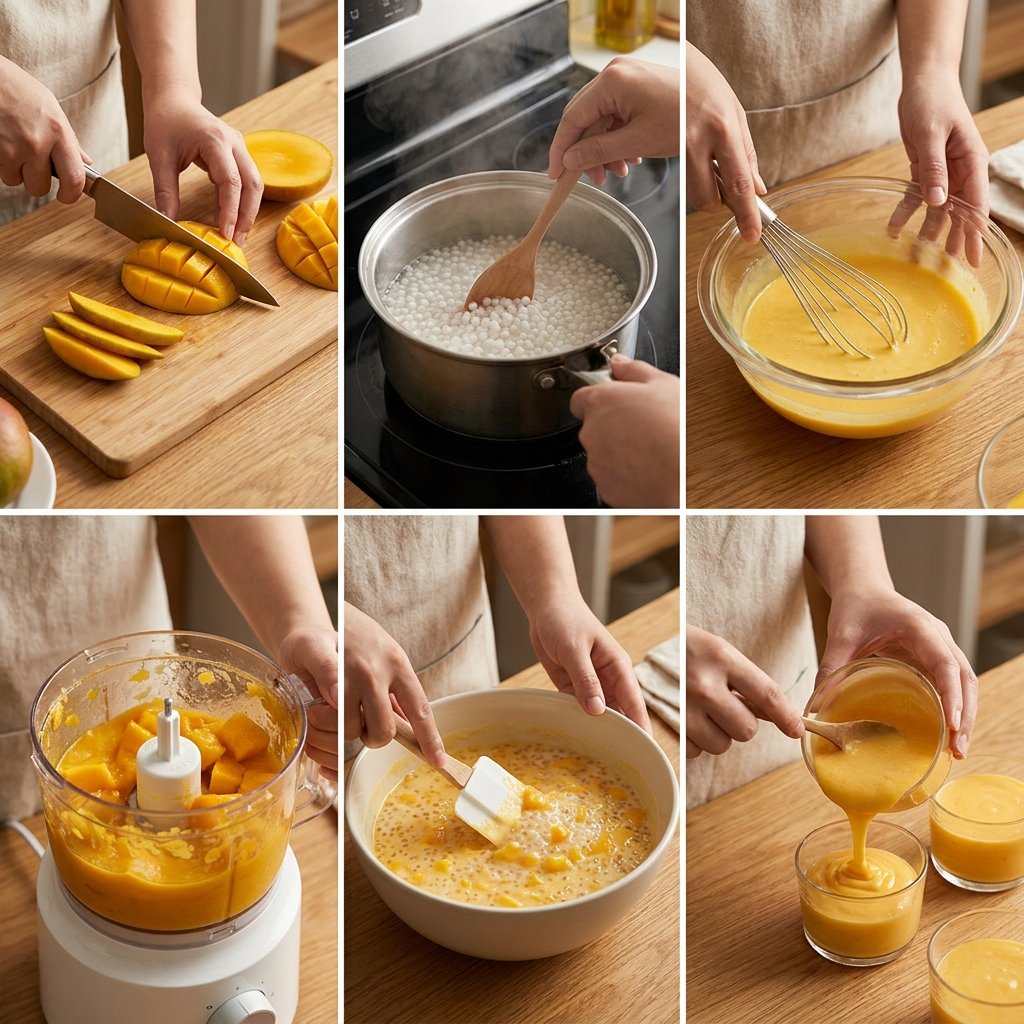
Creating mango sago pudding recipe follows a straightforward process that divides naturally into three phases: cooking the sago, preparing the custard, and assembling the final dessert. Following these steps in order ensures each component reaches proper consistency and temperature for optimal results.
Phase One: Cooking the Sago Pearls
- Bring five cups of filtered water to a rolling boil in a large saucepan over high heat.
- Add one cup of small sago pearls to the boiling water while stirring constantly with a wooden spoon.
- Reduce heat to medium and continue stirring every two minutes to prevent sticking and ensure even cooking.
- Cook the sago for twelve to fifteen minutes until the pearls become mostly transparent with only a tiny white center remaining.
- Strain the cooked sago through a fine-mesh sieve and rinse under cold running water until the water runs clear.
- Spread the cooled sago on a clean kitchen towel to drain completely before using in your mango sago pudding recipe.
Phase Two: Preparing the Custard for Mango Sago Pudding Recipe
- Combine one and a half cups of whole milk with one cup of coconut milk in a heavy-bottomed saucepan.
- Heat the milk mixture over medium heat until small bubbles form around the edges, but do not allow it to boil.
- Whisk four egg yolks with three-quarter cup of granulated sugar in a separate bowl until the mixture becomes pale yellow and slightly thick.
- Slowly pour the hot milk mixture into the egg mixture while whisking constantly to temper the eggs gradually.
- Return the combined mixture to the saucepan and cook over medium-low heat, stirring constantly with a rubber spatula.
- Continue cooking until the custard reaches one-hundred-sixty degrees Fahrenheit on an instant-read thermometer and coats the back of a spoon.
- Remove from heat and immediately stir in two teaspoons of vanilla extract and one-quarter teaspoon of salt.
- Transfer the custard to a clean bowl and press plastic wrap directly onto the surface to prevent skin formation while cooling to room temperature.
Phase Three: Creating the Mango Sago Pudding Recipe
- Peel four ripe mangoes and remove the flesh from the pit using a sharp knife or mango slicer.
- Process the mango flesh in a food processor or blender until completely smooth and uniform.
- Fold the cooled custard into the mango puree using a rubber spatula with gentle motions until just combined.
- Add the cooled sago pearls to the mango custard mixture and fold gently until evenly distributed throughout.
- Divide the mango sago pudding recipe mixture among six serving glasses or bowls, filling each about three-quarter full.
- Refrigerate the finished mango sago pudding recipe for at least three hours until chilled completely and flavors have melded.
Chef Tips for Perfect Mango Sago Pudding Recipe
Professional techniques ensure your mango sago pudding recipe achieves silky texture and balanced flavor every time you prepare it. These insider tips transform a good dessert into an exceptional one that garners compliments from everyone who tastes it.
- Cook the sago pearls until they are almost completely transparent with merely a pinpoint of white remaining in the center. This stage indicates proper doneness and ensures the sago maintains its distinctive chewy texture without becoming mushy. Overcooked sago loses its appeal and dissolves into the custard, compromising the mango sago pudding recipe texture.
- Temper the eggs gradually by adding hot milk in a thin stream while whisking constantly. This technique prevents scrambled egg bits from forming in your custard. Never add cold eggs directly to hot milk, and never allow the mixture to exceed one-hundred-sixty-five degrees Fahrenheit, or you will ruin your mango sago pudding recipe.
- Use a rubber spatula rather than a whisk when folding the sago pearls into the mango custard. Gentle folding motions keep the pearls intact and prevent them from breaking apart. Vigorous stirring will damage the delicate sago structure that makes your mango sago pudding recipe distinctive.
- Select mangoes that emit a sweet fragrance near the stem and yield slightly to pressure. Unripe mangoes lack flavor and create a disappointing mango sago pudding recipe. Overripe mangoes may have fermented notes that detract from the dessert’s tropical profile.
- Chill the mango sago pudding recipe for a minimum of three hours before serving to allow flavors to fully develop and the pudding to set properly. This resting time ensures smooth, cohesive flavors that taste intentional rather than separated.
Common Mango Sago Pudding Recipe Mistakes to Avoid
Understanding where things go wrong helps you navigate common pitfalls and produce consistently excellent results with your mango sago pudding recipe. These mistakes happen to home cooks regularly, but awareness allows you to sidestep them entirely.
Overcooking the sago pearls: Many cooks boil sago until completely transparent, which creates a mushy texture that dissolves into the custard rather than providing distinctive pearls. This occurs because sago continues cooking slightly even after removing from heat. Fix this by removing sago when a small white dot remains in the center and immediately rinsing with cold water to halt cooking.
Scrambling the egg custard: Whisking hot milk directly into room-temperature eggs creates uneven cooking and scrambled bits throughout your mango sago pudding recipe. This happens because the temperature shock causes proteins to coagulate unevenly. Prevent this mistake by tempering eggs slowly with a thin stream of hot milk while whisking continuously.
Failing to strain the sago properly: Excess starch remaining on cooked sago makes the mango sago pudding recipe cloudy and thick rather than silky. This occurs when cooks skip rinsing or use a colander with large holes that allows starch to remain on the pearls. Always rinse thoroughly under cold water and spread on a clean towel to drain completely before folding into custard.
Using unripe or low-quality mangoes: The mango sago pudding recipe depends on fresh, ripe mango flavor to shine, so subpar fruit creates a disappointing result. This mistake happens when cooks purchase mangoes too early or select varieties bred for shipping rather than flavor. Choose fragrant mangoes that yield slightly to pressure and taste sweet before adding to your pudding.
Skipping the chill time: Serving mango sago pudding recipe warm or barely chilled prevents flavors from melding and the pudding from setting properly. Home cooks often rush this step to serve immediately, but patience rewards you with superior flavor and texture. Always refrigerate for at least three hours before serving to achieve the intended consistency.
Best Mango Sago Pudding Recipe Variations and Substitutions
Adapting mango sago pudding recipe to different tastes, dietary needs, and available ingredients maintains the dessert’s essential character while accommodating personal preferences. These variations allow creativity without compromising the tropical essence that makes this pudding special.
| Ingredient | Substitution | Impact on Flavor |
|---|---|---|
| Whole milk | Heavy cream or half-and-half | Creates richer, more luxurious mouthfeel. The mango sago pudding recipe becomes denser and more decadent. Use half cream and half coconut milk to prevent overwhelming the mango flavor. |
| Coconut milk | Condensed coconut milk diluted with water | Intensifies coconut flavor and sweetness significantly. Reduces the amount needed since condensed version is concentrated. Adjust sugar downward to prevent excessive sweetness in your mango sago pudding recipe. |
| Vanilla extract | Fresh vanilla bean or rose water | Vanilla bean adds sophisticated spice and visual appeal with black specks. Rose water introduces floral notes that complement mangoes beautifully. Both options elevate the mango sago pudding recipe to restaurant-quality presentation. |
| Egg yolks | Cornstarch slurry (2 tablespoons cornstarch mixed with 3 tablespoons water) | Creates vegan-friendly mango sago pudding recipe with similar texture. Results in slightly less silky consistency but maintains integrity of the dessert. Some eaters prefer this variation for dietary reasons. |
| Fresh mangoes | Frozen mango puree or canned mango puree | Maintains authentic mango flavor when fresh fruit is unavailable. Frozen mangoes often taste equally delicious to fresh options. Select unsweetened varieties to maintain control over sugar content in your mango sago pudding recipe. |
| Sago pearls | Tapioca pearls or small pearl tapioca | Creates similar chewy texture with slightly different appearance. Pearl tapioca produces larger spheres but delivers comparable mouthfeel. The mango sago pudding recipe remains recognizable with these substitutions. |
| Sugar | Honey or agave nectar | Adds subtle floral sweetness that complements tropical flavors. Use slightly less since honey and agave are sweeter than granulated sugar. The mango sago pudding recipe takes on rounded, sophisticated sweetness. |
Regional variations of mango sago pudding recipe sometimes include pandan leaves for green color and subtle vanilla-like flavor, or lime juice for bright acidity that balances sweetness. These additions respect the pudding’s traditional roots while adding personal touches. The mango sago pudding recipe welcomes reasonable adaptations while maintaining its essential tropical character.
Serving Suggestions for Mango Sago Pudding Recipe
Presenting mango sago pudding recipe with thoughtful accompaniments and attractive styling elevates the dessert experience and makes it memorable for diners. Consider occasion, season, and guest preferences when planning your service approach for this pudding.
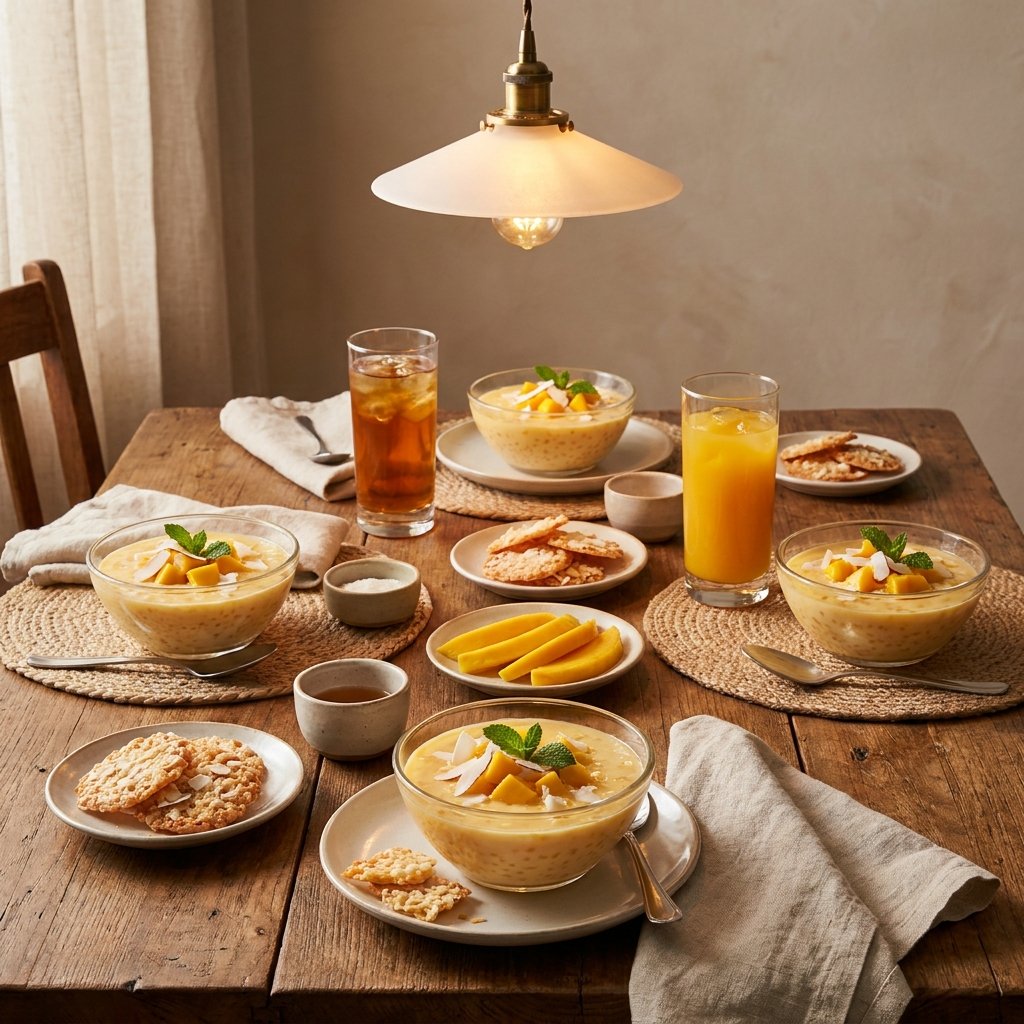
Serve mango sago pudding recipe chilled in clear glass bowls or tall glasses to showcase the beautiful layered appearance and translucent sago pearls suspended throughout. The visual presentation of mango sago pudding recipe contributes significantly to the eating experience, so transparent vessels allow guests to appreciate the dessert’s aesthetic appeal before tasting. This presentation style works beautifully for formal dinner parties, casual gatherings, and special celebrations alike.
Complement your mango sago pudding recipe with thin wafer cookies or delicate coconut tuiles for textural contrast and subtle sweetness. These light accompaniments provide crunch without overwhelming the pudding’s delicate tropical flavors. Alternatively, serve mango sago pudding recipe alongside fresh fruit salads featuring pineapple, papaya, and passion fruit to create a comprehensive tropical dessert experience that celebrates seasonal fruits.
Fresh mint leaves and a light drizzle of condensed milk on top elevate the mango sago pudding recipe presentation while adding flavor complexity. The mint offers refreshing contrast to the rich, sweet pudding, and condensed milk provides visual appeal and additional richness. This simple garnish requires minimal effort but creates restaurant-quality presentation for your mango sago pudding recipe.
Serve the mango sago pudding recipe at summer garden parties, tropical-themed gatherings, and casual family dinners where guests appreciate authentic Southeast Asian cuisine. The chilled pudding provides welcome relief on warm days and refreshes the palate after main courses. When hosting formal dinner parties, present mango sago pudding recipe as an elegant final course that impresses sophisticated diners and introduces them to this classic dessert tradition.
Storage and Reheating for Mango Sago Pudding Recipe
Proper storage techniques maintain the quality and safety of mango sago pudding recipe for several days while preserving its signature texture and flavor. Understanding the best methods for storing this dessert allows you to prepare it in advance without compromising results.
| Method | Duration | Instructions |
|---|---|---|
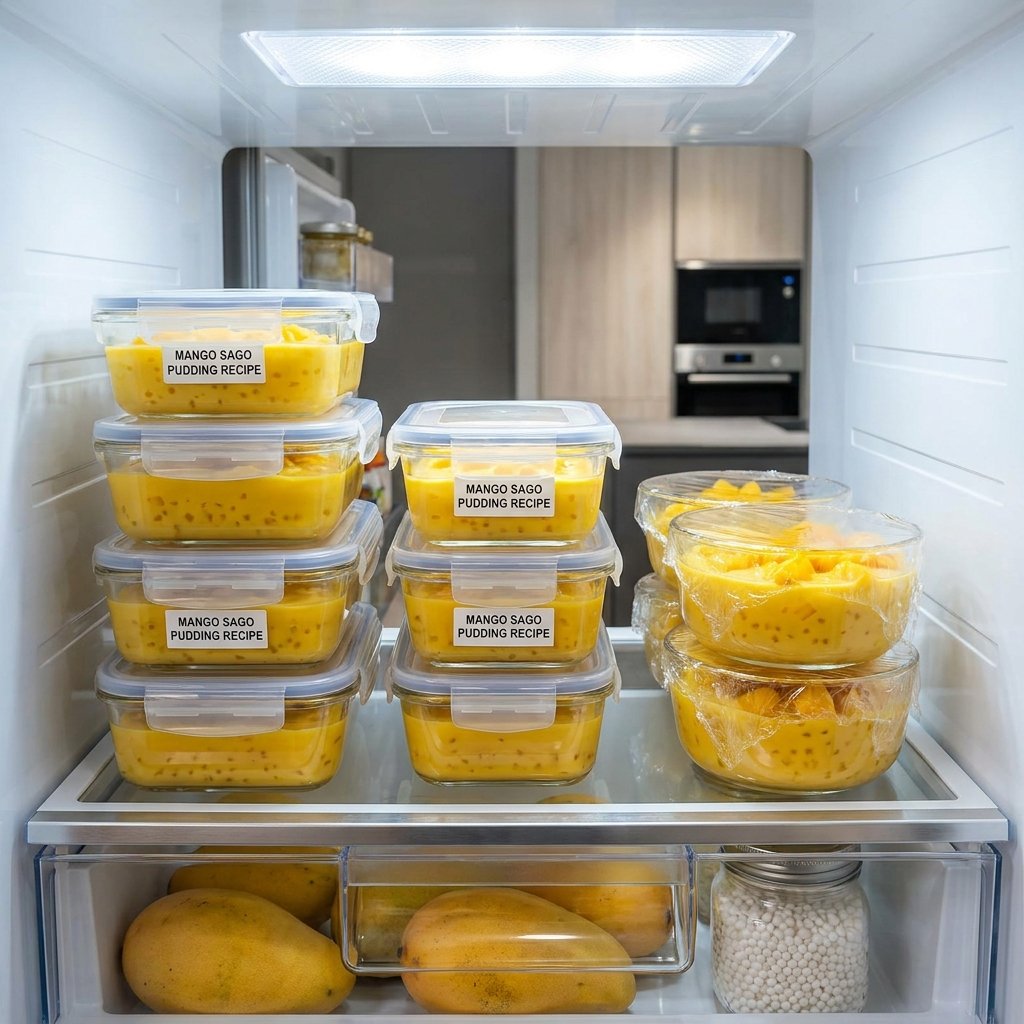
| Refrigerator Storage | 3 to 4 days | Transfer mango sago pudding recipe to individual serving glasses or an airtight container immediately after assembly. Cover tightly with plastic wrap or a lid to prevent absorption of refrigerator odors. Store at forty degrees Fahrenheit or below. The pudding maintains optimal texture and flavor throughout this period. |
| Freezer Storage | Up to 2 months | Freeze mango sago pudding recipe in individual portions using ice cream containers or freezer-safe glasses. Cover tightly to prevent freezer burn. Thaw overnight in the refrigerator before serving. Texture may become slightly grainy, but flavors remain intact and the pudding remains delicious. |
| Make-Ahead Preparation | 1 day in advance | Prepare the sago and custard separately up to one day ahead. Store each component in airtight containers in the refrigerator. Fold components together and assemble the mango sago pudding recipe no more than four hours before serving to prevent the sago from becoming too soft. |
| Component Separation | 3 days for each part | Store cooked sago and prepared custard separately in airtight containers for maximum flexibility. This approach allows you to assemble fresh mango sago pudding recipe whenever desired without preparing the entire dessert at once. |
| Food Safety | Always follow this timing | Mango sago pudding recipe contains egg custard, requiring careful temperature control. Never leave refrigerated pudding at room temperature for longer than two hours. Discard any mango sago pudding recipe that has been left unrefrigerated beyond this timeframe. |
The mango sago pudding recipe does not require reheating since this dessert is served cold directly from the refrigerator. Simply remove from refrigeration ten minutes before serving to allow flavors to brighten slightly as the pudding warms to optimal serving temperature. The mango sago pudding recipe achieves best flavor between fifty-five and sixty-five degrees Fahrenheit, slightly cooler than room temperature but not bone-chilling cold.
Nutritional Information for Mango Sago Pudding Recipe
Understanding the nutritional profile of mango sago pudding recipe helps you incorporate this dessert thoughtfully into balanced meal plans. Each serving provides essential nutrients alongside indulgent tropical flavor that satisfies both nutrition-conscious and pleasure-seeking diners.
| Nutrient | Amount per Serving |
|---|---|
| Calories | 285 |
| Protein | 4.2 grams |
| Total Fat | 12.8 grams |
| Saturated Fat | 9.3 grams |
| Carbohydrates | 39.4 grams |
| Dietary Fiber | 1.2 grams |
| Total Sugar | 28.7 grams |
| Sodium | 58 milligrams |
| Calcium | 142 milligrams |
| Iron | 0.3 milligrams |
Approximate values based on ingredients as listed in the standard mango sago pudding recipe. Actual nutrition may vary based on specific brand selections and individual preparation methods. Mangoes provide valuable vitamin C and beta-carotene, while the egg custard contributes protein and choline. The mango sago pudding recipe offers a balance of carbohydrates from sago and natural fruit sugars, making it an appropriate occasional indulgence within balanced nutrition.
Frequently Asked Questions About Mango Sago Pudding Recipe
Can I make mango sago pudding recipe without eggs for a vegan version?
Yes, you can substitute eggs with a cornstarch slurry to create a vegan-friendly mango sago pudding recipe. Mix two tablespoons of cornstarch with three tablespoons of cold water, then whisk this mixture into the milk before cooking. Heat while stirring constantly until thickened, which takes about five to seven minutes. The resulting mango sago pudding recipe achieves similar creamy texture though slightly less silky than the traditional egg version.
What is the best way to tell when the sago is properly cooked for mango sago pudding recipe?
Properly cooked sago should be almost completely transparent with only a tiny white dot remaining in the very center of each pearl. This indicates the starch has absorbed enough water to become translucent while maintaining its signature chewy bite. If the entire pearl is transparent with no white center, your sago has overcooked and will become mushy when added to the mango sago pudding recipe.
Why does my mango sago pudding recipe taste overly sweet or lack depth of flavor?
This occurs when using low-quality mangoes or adding too much sugar relative to the fruit used. Select fragrant, fully ripe mangoes and taste them before preparing your mango sago pudding recipe. Reduce the sugar to one-half cup if using particularly sweet mango varieties. The vanilla and coconut should complement rather than dominate the mango flavor in your pudding.
Can I prepare mango sago pudding recipe several days in advance for a dinner party?
You can prepare the sago and custard components up to one day in advance and store them separately in airtight containers. Fold the components together and assemble the mango sago pudding recipe no more than four hours before serving. This timing prevents the sago from becoming excessively soft while ensuring the pudding is thoroughly chilled.
Should mango sago pudding recipe be served in individual portions or family-style in a large bowl?
Individual serving glasses showcase the beautiful layers and appearance of mango sago pudding recipe most effectively, making presentation more elegant. Clear glasses allow guests to see the suspended sago pearls and vibrant mango color before tasting. Family-style service in a large bowl works for casual gatherings but sacrifices visual impact compared to individual presentations.
What causes a grainy texture in mango sago pudding recipe and how do I prevent it?
Grainy texture typically results from cooking the custard at too high a temperature or adding cold components to hot ones. Maintain medium-low heat throughout cooking and temper eggs gradually by adding hot milk in a thin stream while whisking. Never allow the custard to exceed one-hundred-sixty-five degrees Fahrenheit, and chill everything before assembling your mango sago pudding recipe.
Can I freeze mango sago pudding recipe for later consumption?
Yes, mango sago pudding recipe freezes well for up to two months in freezer-safe containers. Thaw overnight in the refrigerator before serving. The texture may become slightly grainy after freezing, but flavors remain intact and the pudding remains delicious and suitable for consumption.
How should I adapt mango sago pudding recipe if I only have access to frozen or canned mango puree?
Frozen and canned mango purees work excellently in mango sago pudding recipe and often taste equally delicious to fresh mangoes. Select unsweetened varieties to maintain control over total sugar content. Thaw frozen puree before folding into custard to ensure even distribution throughout the mango sago pudding recipe.
Why does my mango sago pudding recipe separate or appear curdled after a few days in the refrigerator?
Separation occurs when components are not thoroughly combined before refrigeration or when the pudding has been frozen and thawed. Ensure all elements are completely folded together and refrigerated immediately. If using frozen mango sago pudding recipe, thaw slowly in the refrigerator rather than at room temperature for best results.
What flavors pair best with mango sago pudding recipe to create a complete dessert course?
Light, complementary flavors work best alongside mango sago pudding recipe: fresh lime juice brightens the tropical profile, mint provides refreshing contrast, and delicate coconut tuiles offer textural variety. Avoid chocolate, heavy spices, or competing fruit flavors that would overwhelm the pudding’s subtle tropical essence. Consider these pairings when designing your complete mango sago pudding recipe serving experience.
Conclusion
Mango sago pudding recipe stands as the ultimate tropical dessert that delivers restaurant-quality results from your home kitchen without demanding advanced technique or specialized equipment. This pudding succeeds because it respects the natural simplicity of premium ingredients—fresh mangoes, silky custard, and chewy sago pearls—allowing each component to contribute its unique quality to the finished dessert. The mango sago pudding recipe proves incredibly forgiving when you understand basic egg custard principles and sago cooking timing, making it accessible for home cooks at any skill level. Whether you serve it at formal dinner parties, casual family gatherings, or quiet personal moments, mango sago pudding recipe creates tropical escape and sophisticated indulgence. The signature combination of bright mango flavor, luxurious creaminess, and distinctive pearls leaves a lasting impression that keeps people requesting the mango sago pudding recipe again and again.
Related Recipes You’ll Love
tiktok ramen noodles recipe
tiktok tomato feta pasta recipe
no butter single serve chocolate chip recipe
instant mango ice cream with cool whip curry
chana masala instant pot zero oil
homemade mounds bars 3 ingredients
berry cottage cheese breakfast bowl
healthy chocolate coconut snack cake gluten free
chocolate chip cookie dough brownie bites
bariatric gelatin recipe for weight loss
silken tofu miso dressing recipe
pink gelatin trick recipe for weight loss
caribbean curry bowl homemade recipe
Expert Resources and Food Safety
USDA Nutrition Information and Dietary Guidelines
Official Food Safety Guidelines from USDA
Print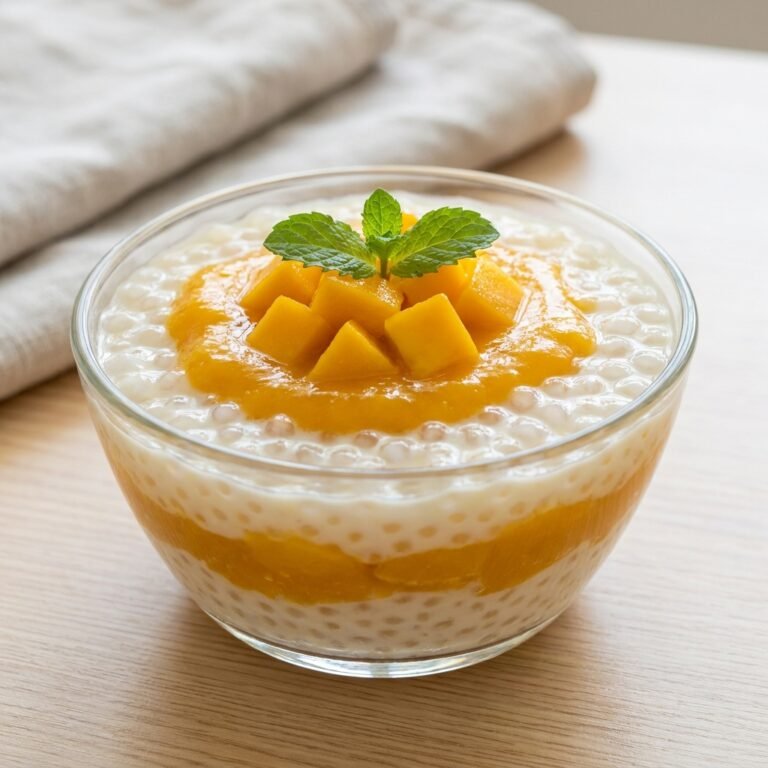
Viral Mango Sago Pudding Recipe
Mango sago pudding recipe delivers a refreshing, creamy tropical dessert with silky mango puree, chewy sago pearls, coconut milk, vanilla, and a smooth custard base.
- Total Time: 4 hours 35 minutes
- Yield: 6 servings 1x
Ingredients
- 4 medium fresh ripe mangoes, about 2 pounds
- 1 cup small sago pearls
- 1.5 cups whole milk
- 1 cup full-fat canned coconut milk
- 4 large egg yolks, room temperature
- ¾ cup granulated sugar
- 2 teaspoons vanilla extract
- ¼ teaspoon salt
- 5 cups filtered water, for cooking sago
Instructions
- Bring filtered water to a rolling boil in a large saucepan over high heat.
- Add small sago pearls to the boiling water while stirring constantly.
- Reduce heat to medium.
- Continue stirring every 2 minutes to prevent sticking.
- Cook sago for 12 to 15 minutes until pearls are mostly transparent with a tiny white center remaining.
- Strain cooked sago through a fine-mesh sieve.
- Rinse under cold running water until the water runs clear.
- Spread cooled sago on a clean kitchen towel to drain completely.
- Combine whole milk and coconut milk in a heavy-bottomed saucepan.
- Heat over medium heat until small bubbles form around the edges, but do not boil.
- Whisk egg yolks and granulated sugar in a separate bowl until pale yellow and slightly thick.
- Slowly pour hot milk mixture into the egg mixture while whisking constantly.
- Return the combined mixture to the saucepan.
- Cook over medium-low heat, stirring constantly with a rubber spatula.
- Cook until custard reaches 160°F and coats the back of a spoon.
- Remove from heat.
- Stir in vanilla extract and salt.
- Transfer custard to a clean bowl.
- Press plastic wrap directly onto the surface and cool to room temperature.
- Peel mangoes and remove the flesh from the pits.
- Blend mango flesh until completely smooth.
- Fold cooled custard into mango puree gently until just combined.
- Add cooled sago pearls and fold gently until evenly distributed.
- Divide pudding among 6 serving glasses or bowls.
- Refrigerate for at least 3 hours until fully chilled.
- Serve cold.
Notes
Cook sago only until mostly transparent with a tiny white center, then rinse well to stop cooking and remove excess starch. Chill for at least 3 hours so the flavors meld and the pudding sets properly.
- Prep Time: 15 minutes
- Cook Time: 20 minutes
- Category: Dessert
- Method: Stovetop
- Cuisine: Southeast Asian
- Diet: Vegetarian
Nutrition
- Serving Size: 1 serving
- Calories: 285
- Sugar: 29g
- Sodium: 58mg
- Fat: 13g
- Saturated Fat: 9g
- Unsaturated Fat: 4g
- Trans Fat: 0g
- Carbohydrates: 39g
- Fiber: 1g
- Protein: 4g
- Cholesterol: 123mg